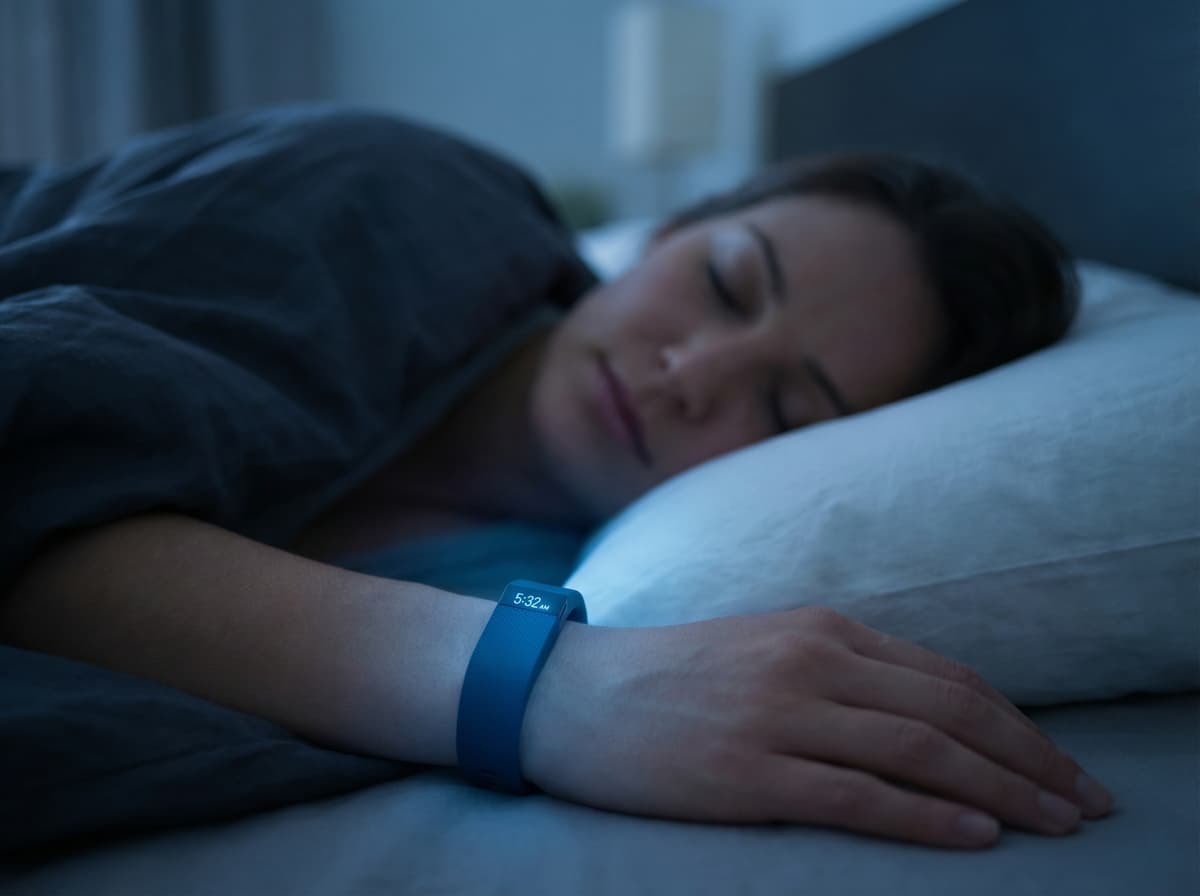
Why Respiratory Rate Matters: The Most Overlooked Metric on Your Wearable
Somewhere in your wearable's sleep data is a number you have probably never looked at. It says something like "14.2 breaths/min" and it appears under a heading labeled "Respiratory Rate" or "Breathing Rate." You scrolled past it to check your sleep score. That was a mistake.
Respiratory rate is one of the most clinically useful metrics your wearable tracks. Doctors have used it for centuries as a vital sign alongside heart rate, blood pressure, and body temperature. The reason it matters for everyday health tracking is simple: it is remarkably stable. Your heart rate swings 40 BPM during a workout. Your HRV can fluctuate 20% night to night. But your respiratory rate barely moves. When it does, something real is happening.
What Respiratory Rate Measures
Respiratory rate is the number of complete breath cycles (one inhale plus one exhale) you take per minute. For most healthy adults at rest, this falls between 12 and 20 breaths per minute. During sleep, it typically settles into an even narrower personal range, often within 1 to 2 breaths per minute of your baseline night after night.
Your breathing rate reflects the balance between oxygen demand and carbon dioxide removal. Your brainstem controls this automatically through chemoreceptors that monitor blood gas levels. When CO2 rises or O2 drops, your breathing rate increases. When everything is in balance, your rate holds steady.
This automatic regulation is why respiratory rate is so stable during sleep. You are not consciously breathing. Your body is running on autopilot, and the autopilot is precisely calibrated.
How Your Wearable Measures It
Most wearables measure respiratory rate during sleep using one of two methods:
- Accelerometer-based detection: The device detects the micro-movements of your chest or wrist that occur with each breath. Algorithms isolate the breathing signal from other motion.
- Respiratory Sinus Arrhythmia (RSA): Your heart rate naturally increases slightly when you inhale and decreases when you exhale. By analyzing the pattern of heartbeat intervals, your wearable can extract your breathing rate from your heart rate data.
Devices like Oura Ring, Apple Watch, Garmin, Fitbit, and WHOOP all track overnight respiratory rate, though the specific method and reporting format varies. Some show a single nightly average. Others show a range (low to high across the night). Some display it per sleep stage.
Validation studies have confirmed that wrist-worn and finger-worn wearables measure respiratory rate with clinically acceptable accuracy. A 2021 study in Journal of Medical Internet Research found that consumer wearables achieved a mean absolute error of 1.0 to 1.5 breaths per minute compared to clinical polysomnography, which is well within useful range for trend tracking.
Normal Respiratory Rate Ranges
| Respiratory Rate | Context |
|---|---|
| 12-20 breaths/min | Normal resting range for healthy adults |
| 12-16 breaths/min | Typical overnight range for most adults |
| Below 12 | Unusually low. May indicate athletic conditioning or medication effects. |
| Above 20 at rest | Elevated. Worth investigating if sustained. |
| Above 24 at rest | Clinically significant. Consult a healthcare provider. |
The population range matters less than your personal baseline. Some people consistently breathe at 13 per minute during sleep. Others sit at 17. Both are normal. What matters is deviation from your own pattern.
A person whose overnight respiratory rate is always 14.0 to 14.8 who suddenly reads 17.2 for two consecutive nights is showing a meaningful signal, even though 17.2 falls within the "normal" population range.
Why Stability Makes It Powerful
Most health metrics are noisy. Your resting heart rate can shift 3 to 5 BPM based on hydration, caffeine, how hot your room was, or whether you had one glass of wine. Your HRV can swing 15 to 20% from one night to the next for no obvious reason. This noise makes it harder to detect real signals.
Respiratory rate is different. In healthy individuals, overnight respiratory rate varies by less than 1 breath per minute from night to night. A 2020 study in European Respiratory Journal analyzed overnight respiratory rate stability in over 4,500 individuals and confirmed that the coefficient of variation was among the lowest of any continuously tracked physiological metric.
This stability means that when respiratory rate changes, the signal-to-noise ratio is high. A shift of 2 to 3 breaths per minute above baseline is not random variation. Something caused it.
What Causes Respiratory Rate to Change
Respiratory Infections (The Early Warning Signal)
This is the most clinically validated use case. Respiratory infections, including influenza, COVID-19, RSV, and bronchitis, cause measurable increases in overnight respiratory rate, often before other symptoms appear.
During the COVID-19 pandemic, wearable data became a significant research tool. A 2021 study in The Lancet Digital Health analyzed data from over 32,000 Fitbit users and found that elevated respiratory rate detected COVID-19 infection with 20% sensitivity as a standalone metric, but when combined with heart rate and sleep data, detection sensitivity rose to over 70%.
The real-world case that brought this to public attention: professional golfer Nick Watney noticed his overnight respiratory rate had climbed from the low 14s to the low 18s over several days. He withdrew from a PGA Tour event in June 2020 and tested positive for COVID-19. His wearable flagged the change before he felt sick.
Your wearable cannot diagnose an infection. But a sustained respiratory rate increase of 2+ breaths per minute over 2 to 3 nights, especially combined with elevated resting heart rate and suppressed HRV, is a strong signal that your immune system is responding to something.
Stress and Anxiety
Chronic stress activates shallow, rapid breathing patterns that persist even during sleep. The sympathetic nervous system overrides the body's natural tendency toward slow, deep breathing.
A 2019 study in Psychophysiology found that individuals reporting high psychological stress had overnight respiratory rates 1.5 to 2.8 breaths per minute higher than low-stress counterparts, independent of fitness level or body composition. The elevation was most pronounced during REM sleep, when the autonomic nervous system is more active.
Alcohol Consumption
Alcohol relaxes the muscles of the upper airway, which can partially obstruct breathing during sleep. The body compensates by increasing breathing rate to maintain oxygen levels.
A 2018 study in JMIR Mental Health found that heavy alcohol consumption increased overnight respiratory rate by an average of 1.4 breaths per minute compared to alcohol-free nights. This effect was additive with the alcohol-related decreases in deep sleep and HRV, creating a triple disruption.
Dehydration
When you are dehydrated, blood volume decreases. Your heart works harder (higher heart rate) and your lungs compensate with slightly faster breathing to maintain oxygen delivery. This is a subtle effect, usually 0.5 to 1.5 breaths per minute, but detectable in wearable data.
High Altitude
At elevation, reduced atmospheric oxygen triggers faster breathing to maintain blood oxygen levels. This is a normal physiological response. If you travel to altitude and see your respiratory rate climb by 2 to 4 breaths per minute, that is expected adaptation, not a health concern.
Overtraining
Intense exercise without adequate recovery can elevate overnight respiratory rate as part of a broader autonomic imbalance. If you see respiratory rate trending upward alongside rising resting heart rate and dropping HRV over several days, your training load may be exceeding your recovery capacity.
Asthma and Chronic Respiratory Conditions
People with asthma, COPD, or other chronic respiratory conditions may show elevated baseline respiratory rates and more variability from night to night. Tracking the trend can help identify exacerbation periods before they become severe.
Respiratory Rate Across Sleep Stages
Your breathing rate is not constant throughout the night. It changes predictably with each sleep stage:
| Sleep Stage | Respiratory Rate Behavior |
|---|---|
| Light sleep (N1/N2) | Regular, moderate rate. Slightly above deep sleep. |
| Deep sleep (N3) | Slowest and most regular breathing. Lowest respiratory rate of the night. |
| REM sleep | Most variable. Rate increases and becomes irregular as the autonomic nervous system fluctuates. |
This is why some wearables report a range rather than a single number. An overnight range of 12.8 to 16.4 is typical and reflects the normal variation between deep sleep (lower end) and REM (higher end).
If your wearable provides per-stage respiratory data, pay attention to your deep sleep rate specifically. That is the cleanest measurement, least influenced by dreams, body position changes, or micro-awakenings.
How to Use Respiratory Rate in Your Health Tracking
Establish Your Baseline
Before respiratory rate data becomes useful, you need a personal baseline. Check your wearable's overnight respiratory rate for 7 to 14 consecutive nights during a period of normal health, normal stress, and no alcohol. Average those readings. That is your baseline.
For most people, the baseline will fall between 12 and 16 breaths per minute with very little variation (less than 1 breath per minute night to night).
Set Your Personal Threshold
Once you know your baseline, any reading 2+ breaths per minute above it for 2 or more consecutive nights is worth paying attention to. A single elevated night can be caused by sleeping position, room temperature, or a heavy meal. Two consecutive nights suggests a systemic cause.
Combine It With Other Metrics
Respiratory rate is most powerful when read alongside your other metrics:
| Pattern | Likely Cause |
|---|---|
| Respiratory rate up + resting heart rate up + HRV down | Illness onset or acute stress |
| Respiratory rate up + deep sleep down + HRV down | Alcohol or overtraining |
| Respiratory rate up + body temperature up | Immune response (infection likely) |
| Respiratory rate up alone (other metrics stable) | Possible nasal congestion, allergies, or room conditions |
Track the Trend, Not the Number
A respiratory rate of 15.6 versus 15.2 means nothing. A respiratory rate that has climbed from 14.0 to 16.5 over 4 consecutive nights means something. Always look at the direction and duration, not the absolute value.
How MotionSync Helps
Most wearable apps bury respiratory rate in a secondary screen. You have to actively dig for it. And even when you find it, you are left to interpret the number yourself, in isolation from your other metrics.
MotionSync pulls respiratory rate data alongside your heart rate, HRV, sleep stages, and body temperature from all your connected devices (Apple Health, Garmin, Oura, Fitbit, Google Fit). The AI health coach monitors these metrics together and flags when the combination suggests something meaningful.
If your respiratory rate climbs 2 breaths per minute above baseline while your resting heart rate rises and your HRV drops, MotionSync connects those dots for you. Instead of checking three apps and noticing the respiratory rate change by accident, you get a clear explanation: "Your overnight breathing rate, resting heart rate, and HRV have all shifted over the last 3 nights. This pattern often appears 1 to 2 days before cold or flu symptoms. Consider resting today."
One dashboard. One explanation. No digging required.
FAQ
Is 12 breaths per minute too low? For most adults, no. A respiratory rate of 12 is at the low end of normal and is common in people who are physically fit or practice regular breathwork. Athletes and meditation practitioners often have resting rates between 10 and 14. If you feel fine and your other metrics are healthy, a low respiratory rate is typically a positive sign. If it drops below 10 or you experience symptoms like dizziness, consult a healthcare provider.
Why does my respiratory rate spike during REM sleep? REM sleep involves increased autonomic nervous system activity. Your brain is highly active during REM (processing memories, dreams), and this drives more variable breathing patterns. It is normal for your respiratory rate during REM to be 2 to 4 breaths per minute higher than during deep sleep.
Can I lower my respiratory rate? Regular breathwork practice, aerobic exercise, and stress management can all lower your baseline respiratory rate over time. Cyclic sighing (long exhale breathing) and diaphragmatic breathing practiced daily for 4 to 8 weeks have been shown to reduce resting respiratory rate by 1 to 3 breaths per minute in multiple studies. This is generally a marker of improved parasympathetic tone.
My Oura and Apple Watch show different respiratory rates. Which is right? Both can be accurate within their measurement method. Differences of 1 to 2 breaths per minute between devices are common due to different sensor positions (finger versus wrist), different measurement windows (which sleep stages are sampled), and different averaging methods. Pick one device for trending and stick with it. The consistency of the trend matters more than the absolute number.
Should I worry if my respiratory rate is elevated for one night? No. A single elevated reading can result from sleeping position, a stuffy room, nasal congestion, a heavy meal, or even a vivid dream. Look for sustained elevation over 2 to 3 consecutive nights before investigating further.
Can wearables detect sleep apnea through respiratory rate? Wearables can detect breathing irregularities that correlate with sleep apnea, including cyclical patterns of respiratory rate changes and associated oxygen desaturation events. However, they cannot diagnose sleep apnea. If your wearable consistently shows irregular breathing patterns during sleep, combined with symptoms like daytime fatigue, loud snoring, or morning headaches, a clinical sleep study is the appropriate next step.
Related Articles:
About the author

Written by MotionSync Team
Editorial Team
The MotionSync editorial team writes about wearable data, recovery, sleep, and heart health in plain English. Articles draw on peer-reviewed research and the metrics your wearable already tracks. Content is for general education and is not a substitute for medical advice.