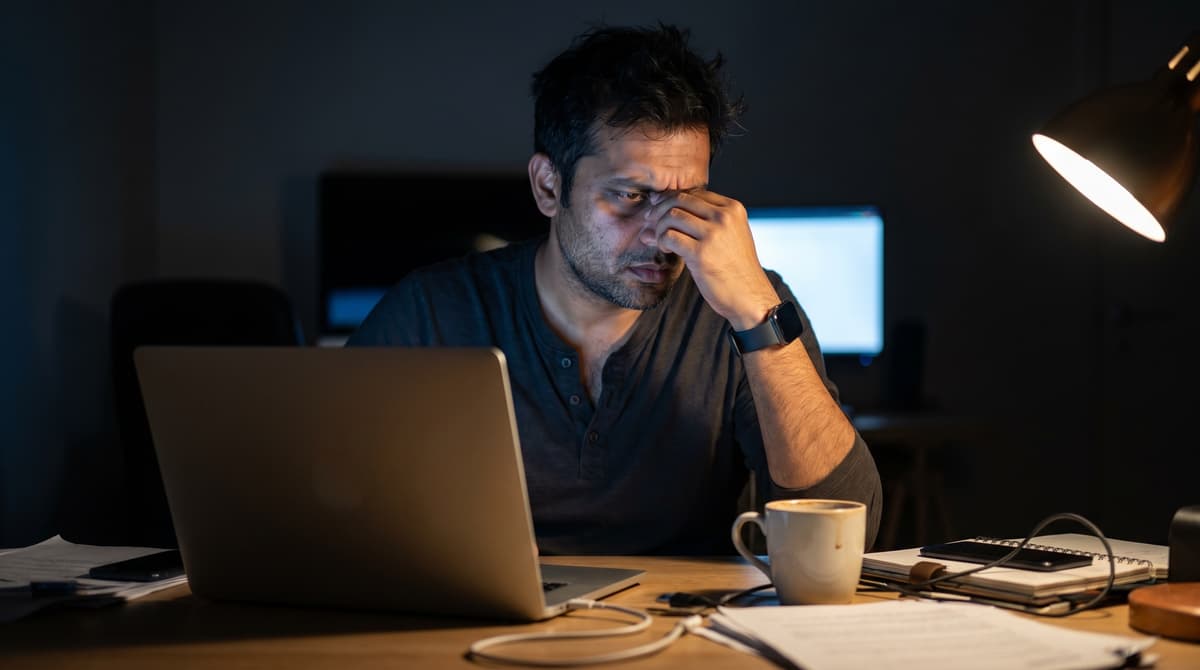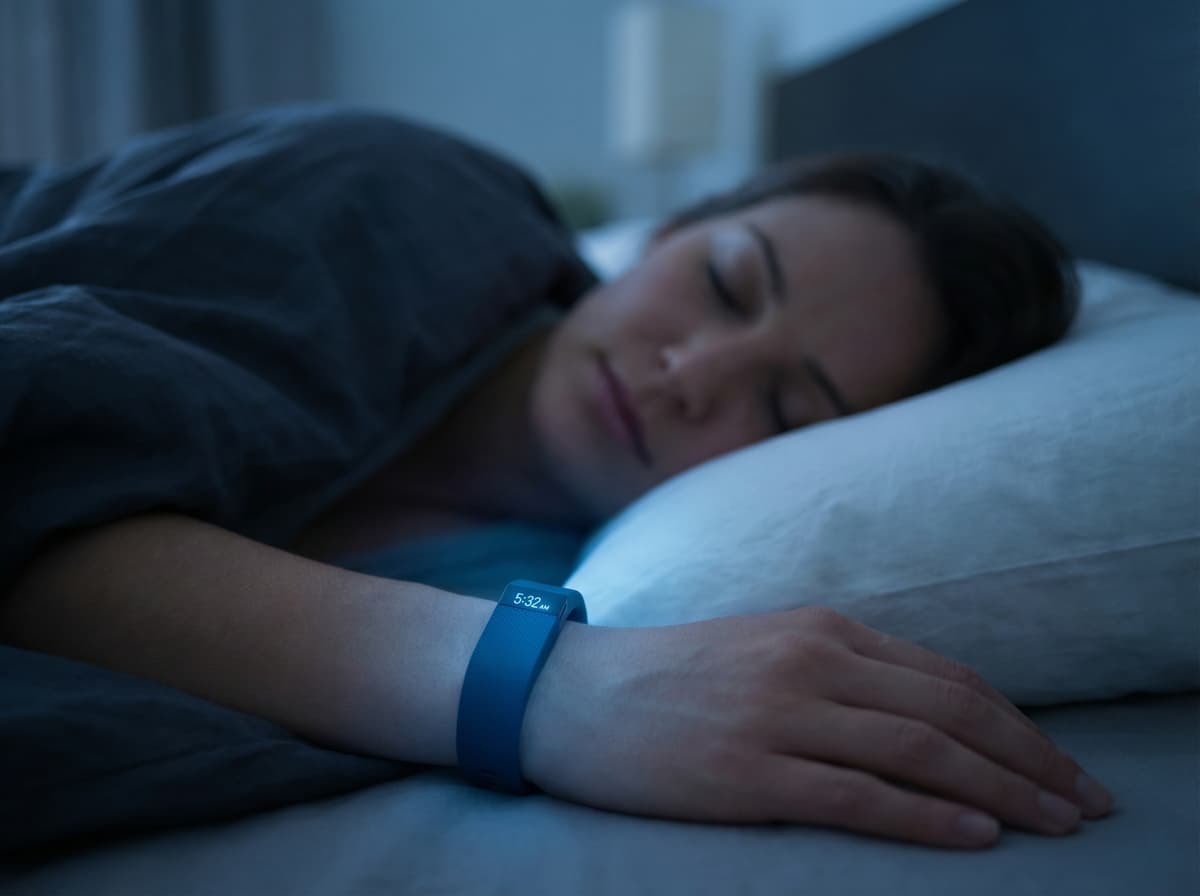
How Stress Affects Your Heart Rate, HRV, and Sleep Data
Your body does not experience stress as a feeling. It experiences stress as a physiological event. Cortisol floods your bloodstream. Your heart rate increases. Blood flow redirects to your muscles. Your nervous system shifts into sympathetic dominance. These are measurable changes, and your wearable records every one of them.
The problem is that most people look at their health data in isolation. They see elevated resting heart rate on one screen, low HRV on another, and poor sleep scores on a third. They treat each metric as a separate problem. But stress connects all of them. Understanding the stress signature across your wearable data changes how you read your numbers and what you do about them.
The Stress Signature: What It Looks Like in Your Data
Stress, whether psychological (work deadline, relationship conflict, financial pressure) or physiological (overtraining, illness, sleep deprivation), triggers the same cascade through your autonomic nervous system. The effects show up across every metric your wearable tracks.
Resting Heart Rate Rises
When your sympathetic nervous system activates under stress, your heart beats faster to circulate blood to muscles and vital organs. At rest, this shows up as an elevated resting heart rate.
A 2021 study published in Psychosomatic Medicine tracked 682 participants over 12 months and found that periods of high psychological stress were associated with a resting heart rate increase of 3 to 7 BPM above individual baselines. That might sound small, but in the context of resting heart rate, a sustained 5 BPM elevation is significant.
What to look for in your data:
- Your resting heart rate trending 3+ BPM above your 30-day average for 3 or more consecutive days
- Resting heart rate that rises gradually over a week with no change in exercise, caffeine, or alcohol
- Overnight resting heart rate that stays elevated through the full sleep period instead of dipping in the first half of the night
HRV Drops
Heart rate variability (HRV) is the single most sensitive metric for detecting stress. HRV measures the variation in time between consecutive heartbeats. Higher variability reflects parasympathetic ("rest and digest") dominance. Lower variability reflects sympathetic ("fight or flight") dominance.
Under stress, your sympathetic nervous system takes over. The heart beats more rigidly, with less variation between beats. HRV drops.
A 2018 meta-analysis in Neuroscience and Biobehavioral Reviews reviewed 37 studies and found that chronic psychological stress reduced HRV by 12 to 25% on average, with the strongest effects seen in RMSSD (the metric most wearables use). The reduction persisted even during sleep, meaning stress was suppressing recovery around the clock.
What to look for in your data:
- Overnight HRV 15%+ below your 14-day average for 3 or more consecutive days
- HRV that fails to recover to baseline even after adequate sleep duration
- A widening gap between your best and worst HRV readings (high variability in the variability itself is a stress signal)
Sleep Architecture Degrades
Stress does not just make it harder to fall asleep. It changes the structure of sleep itself, even when you stay asleep for a full 7 to 8 hours.
Cortisol, the primary stress hormone, follows a circadian rhythm. It should be lowest around midnight and peak around 7 AM. Chronic stress flattens this curve, keeping cortisol elevated throughout the night. Elevated nighttime cortisol:
- Increases time in light sleep (N1 and N2) at the expense of deep sleep
- Reduces deep sleep (N3) duration by 15 to 30% in chronically stressed individuals, according to a 2019 study in Sleep Medicine Reviews
- Fragments REM sleep, causing more awakenings in the second half of the night
- Increases sleep onset latency (the time it takes to fall asleep)
The result is a night that looks adequate on the clock but produces poor recovery scores. You slept 8 hours. Your deep sleep was 40 minutes instead of 80. Your sleep efficiency was 78% instead of 90%. Your body never completed the repair cycles it needed.
Body Temperature Shifts
Some wearables (Oura, Apple Watch, Fitbit) track skin or wrist temperature overnight. Stress can elevate nighttime body temperature by 0.1 to 0.3 degrees Fahrenheit above baseline, a phenomenon researchers call psychogenic fever or stress-induced hyperthermia.
A 2015 study in Temperature found that chronic psychological stress produced sustained low-grade temperature elevation that persisted during sleep. This temperature shift further disrupts the body's ability to enter deep sleep, since deep sleep requires a core temperature drop of about 2 degrees Fahrenheit from daytime levels.
Respiratory Rate Increases
Stress activates faster, shallower breathing patterns. Your overnight respiratory rate, normally stable between 12 and 20 breaths per minute, may creep upward by 1 to 3 breaths per minute during periods of sustained stress.
This is a subtle but meaningful signal. Respiratory rate is one of the most stable overnight metrics. When it shifts, something systemic is happening.
The Stress-Sleep Feedback Loop
Here is what makes stress particularly damaging: stress worsens sleep, and poor sleep amplifies stress. The two create a reinforcing cycle that accelerates over days and weeks.
The loop works like this:
- Stress elevates cortisol. Your sympathetic nervous system stays activated.
- Elevated cortisol suppresses deep sleep. You get less physical recovery overnight.
- Poor recovery further elevates cortisol the next morning. Your stress baseline is now higher.
- Higher baseline stress makes the next night's sleep worse. HRV drops further. Resting heart rate climbs further.
- After 3 to 5 days, the cycle is self-sustaining. You feel wired but tired. Your data confirms it: declining HRV, rising resting heart rate, shrinking deep sleep, rising sleep fragmentation.
A 2020 longitudinal study in Psychoneuroendocrinology tracked 1,200 adults over 6 months and found that the stress-sleep feedback loop was the strongest predictor of subjective burnout. Participants whose HRV and sleep quality declined simultaneously for 5+ consecutive days were 3.4 times more likely to report burnout symptoms within the following month.
The critical insight: breaking the loop early is far easier than breaking it late. If you catch the signature in your data at day 2 or 3, a single intervention can reset the cycle. At day 10, recovery takes significantly longer.
Reading the Combined Signal
Individual metrics in isolation can mislead you. Resting heart rate alone spikes for many reasons (caffeine, dehydration, a hard workout). HRV alone drops after alcohol or intense training. Poor sleep alone can come from a hot room or a late meal.
The stress signature is the combination. When you see these patterns together, stress is the most likely cause:
| Metric | Normal | Stress Signal |
|---|---|---|
| Resting heart rate | At or below 30-day average | 3-7 BPM above baseline, sustained 3+ days |
| HRV (overnight) | At or above 14-day average | 15-25% below baseline, sustained 3+ days |
| Deep sleep | 60-100+ minutes | Under 50 minutes despite 7+ hours total sleep |
| Sleep efficiency | 85-95% | Below 82% |
| Body temperature | At baseline | 0.1-0.3 degrees F above baseline overnight |
| Respiratory rate | Stable at personal baseline | 1-3 breaths/min above baseline |
If 3 or more of these shift simultaneously, you are looking at a stress response, not isolated noise. The data is telling you to intervene.
Evidence-Backed Interventions That Actually Move the Numbers
Not all stress management techniques show up in wearable data. Journaling might help you process emotions, but it does not reliably shift HRV or resting heart rate within 24 to 48 hours. The following interventions have been studied specifically for their measurable physiological effects.
Cyclic Sighing (5 Minutes Per Day)
What it is: A breathing pattern where the inhale is split into two parts (inhale through the nose, then a second short inhale to fully fill the lungs) followed by a long, slow exhale through the mouth. Repeat for 5 minutes.
The evidence: A 2023 study published in Cell Reports Medicine by Stanford researchers compared cyclic sighing to box breathing, cyclic hyperventilation, and mindfulness meditation. Cyclic sighing produced the largest improvements in positive mood, anxiety reduction, and physiological calm. Critically, it reduced resting respiratory rate and improved HRV more effectively than the other techniques.
Why it works: The extended exhale activates the vagus nerve, which directly stimulates parasympathetic activity. This is the fastest known method for shifting your nervous system from sympathetic to parasympathetic dominance.
What you will see in your data: HRV improvement within 1 to 2 days of consistent daily practice. Resting heart rate may drop 1 to 3 BPM over a week. Overnight respiratory rate stabilizes.
Zone 2 Training (30 to 60 Minutes, 3 to 4 Times Per Week)
What it is: Low-intensity aerobic exercise where you can hold a conversation. Heart rate stays at roughly 60 to 70% of your maximum. Walking briskly, easy cycling, light jogging, or swimming at a comfortable pace all qualify.
The evidence: A 2019 meta-analysis in Sports Medicine found that regular aerobic exercise at moderate intensity increased resting HRV by 7 to 14% over 8 to 12 weeks. A 2022 study in The Lancet Psychiatry analyzing data from 1.2 million adults found that exercise reduced self-reported mental health burden by 43%, with aerobic activities providing the strongest effect at 3 to 5 sessions per week of 30 to 60 minutes each.
Why it works: Zone 2 training strengthens the parasympathetic nervous system over time. It improves cardiac efficiency (lower resting heart rate for the same output), enhances vagal tone (higher baseline HRV), and promotes deeper sleep by increasing the homeostatic sleep drive without the cortisol spike of high-intensity training.
What you will see in your data: Gradual HRV improvement over 4 to 8 weeks. Resting heart rate decline of 3 to 8 BPM over 2 to 3 months. Increased deep sleep duration, particularly on training days.
Nature Exposure (20 Minutes Minimum)
What it is: Spending time in a natural environment: a park, a trail, a garden, a body of water. Walking is ideal but not required. The key is being outside in a non-urban natural setting.
The evidence: A 2019 study in Frontiers in Psychology measured cortisol levels in 36 participants and found that spending 20 minutes in a natural setting reduced cortisol by 21.3% compared to an urban environment, with the effect peaking at 20 to 30 minutes. A larger 2022 review in International Journal of Environmental Research and Public Health confirmed that nature exposure reliably reduces cortisol, lowers heart rate, and improves HRV across 42 studies.
Why it works: Natural environments reduce sympathetic nervous system activation through a combination of reduced sensory stimulation (less noise, less visual complexity), exposure to phytoncides (organic compounds from plants that lower cortisol), and attention restoration (natural settings allow the prefrontal cortex to rest). The Japanese practice of shinrin-yoku (forest bathing) is built on this research.
What you will see in your data: Cortisol reduction that manifests as lower resting heart rate and improved HRV within hours of exposure. Regular nature exposure (3+ times per week) produces cumulative improvements in overnight recovery metrics.
Sleep Hygiene for Stress Recovery
When you are in a stress cycle, standard sleep duration is not enough. You need to optimize for sleep quality specifically:
- Cool the room to 64 to 67 degrees F. This supports the core temperature drop required for deep sleep, which stress is already suppressing.
- Blackout the room completely. Even dim light exposure during sleep reduces melatonin production by up to 50%, according to a 2022 study in PNAS.
- Fix your wake time, not your bedtime. A consistent wake time anchors your circadian rhythm more effectively than a consistent bedtime. Set an alarm for the same time every day, including weekends.
- No screens 60 minutes before bed. During stress periods, this is non-negotiable. Blue light suppresses melatonin, and content consumption (news, social media, email) activates the sympathetic nervous system.
How Long Does Recovery Take?
The timeline depends on how long the stress lasted and whether the source is resolved.
| Stress Duration | Typical Recovery Timeline |
|---|---|
| Acute (1 to 3 days of elevated stress) | 1 to 3 days of normal HRV and sleep with intervention |
| Moderate (1 to 2 weeks of sustained stress) | 5 to 10 days with consistent interventions |
| Chronic (months of unresolved stress) | 4 to 8 weeks of sustained lifestyle changes |
You will see HRV respond first. It is the most sensitive metric and typically begins improving within 24 to 48 hours of effective intervention. Resting heart rate follows over 3 to 7 days. Sleep architecture is the slowest to normalize, often taking 1 to 2 weeks to show consistent deep sleep improvement.
Track your 7-day rolling averages. Single-day readings bounce around too much. When your 7-day HRV average starts trending upward and your 7-day resting heart rate starts trending downward, you are recovering.
How MotionSync Helps You Catch Stress Early
The challenge with stress is that you often do not recognize it until the feedback loop is already established. You adapt to feeling slightly off. You rationalize poor sleep. You attribute fatigue to being busy.
Your data does not rationalize. If your HRV has dropped 18% over the last 5 days while your resting heart rate climbed 4 BPM and your deep sleep halved, the pattern is clear regardless of whether you feel stressed.
MotionSync pulls data from all your wearables (Apple Health, Garmin, Oura, Fitbit, Google Fit) into one dashboard and tracks these patterns across metrics simultaneously. The AI health coach identifies the stress signature in your combined data and explains what is happening in plain English: "Your HRV has been declining for 5 days while your resting heart rate has increased. Your deep sleep dropped below 45 minutes last night. This pattern is consistent with sustained stress. Here is what to prioritize today."
Instead of checking three apps and connecting the dots yourself, you get one clear signal and a specific recommendation.
FAQ
Can wearables actually detect stress? Wearables do not measure stress directly. They measure physiological markers that correlate strongly with stress: heart rate, HRV, sleep architecture, body temperature, and respiratory rate. When multiple markers shift simultaneously in the pattern described above, stress is the most common explanation. Research consistently validates this correlation, though the strength varies by individual.
Is all stress bad for my health data? No. Acute, short-term stress (a hard workout, a challenging presentation, a cold shower) is normal and even beneficial. It triggers adaptation. The problem is chronic, unresolved stress that persists for days or weeks without recovery. Your data helps you distinguish between the two: acute stress shows a sharp dip followed by a quick rebound. Chronic stress shows a gradual decline with no rebound.
My HRV is low but I do not feel stressed. What is going on? Physiological stress and psychological stress are not the same thing. You can feel emotionally fine while your body processes physical stress from overtraining, poor sleep, illness onset, or dietary issues. Trust the data over the feeling. If your HRV has been declining for a week, something is taxing your system even if you cannot identify a psychological source.
How quickly does cyclic sighing work? Most people notice a subjective calming effect within 2 to 3 minutes of the first session. Measurable HRV improvements typically appear within 1 to 2 days of daily practice (5 minutes per day). The Stanford study found significant physiological improvements after just one month of daily practice.
Will intense exercise help me manage stress? It depends. Moderate-intensity exercise (Zone 2) reliably reduces stress markers and improves recovery. High-intensity exercise (Zone 4 and 5) temporarily increases cortisol and sympathetic activity. If you are already in a stress cycle with suppressed HRV and poor sleep, adding high-intensity training can deepen the cycle. During active stress periods, prioritize Zone 2 and save high-intensity work for when your recovery metrics have stabilized.
How do I know if my stress is chronic enough to see a doctor? If your wearable data shows the stress signature (declining HRV, rising resting heart rate, degraded sleep) for more than 3 to 4 weeks despite implementing lifestyle interventions, consult a healthcare provider. Persistent physiological stress signals can indicate underlying conditions including anxiety disorders, thyroid dysfunction, or cardiovascular issues that benefit from medical evaluation.
Related Articles:
About the author

Written by MotionSync Team
Editorial Team
The MotionSync editorial team writes about wearable data, recovery, sleep, and heart health in plain English. Articles draw on peer-reviewed research and the metrics your wearable already tracks. Content is for general education and is not a substitute for medical advice.