How Alcohol Affects Your Sleep, HRV, and Recovery
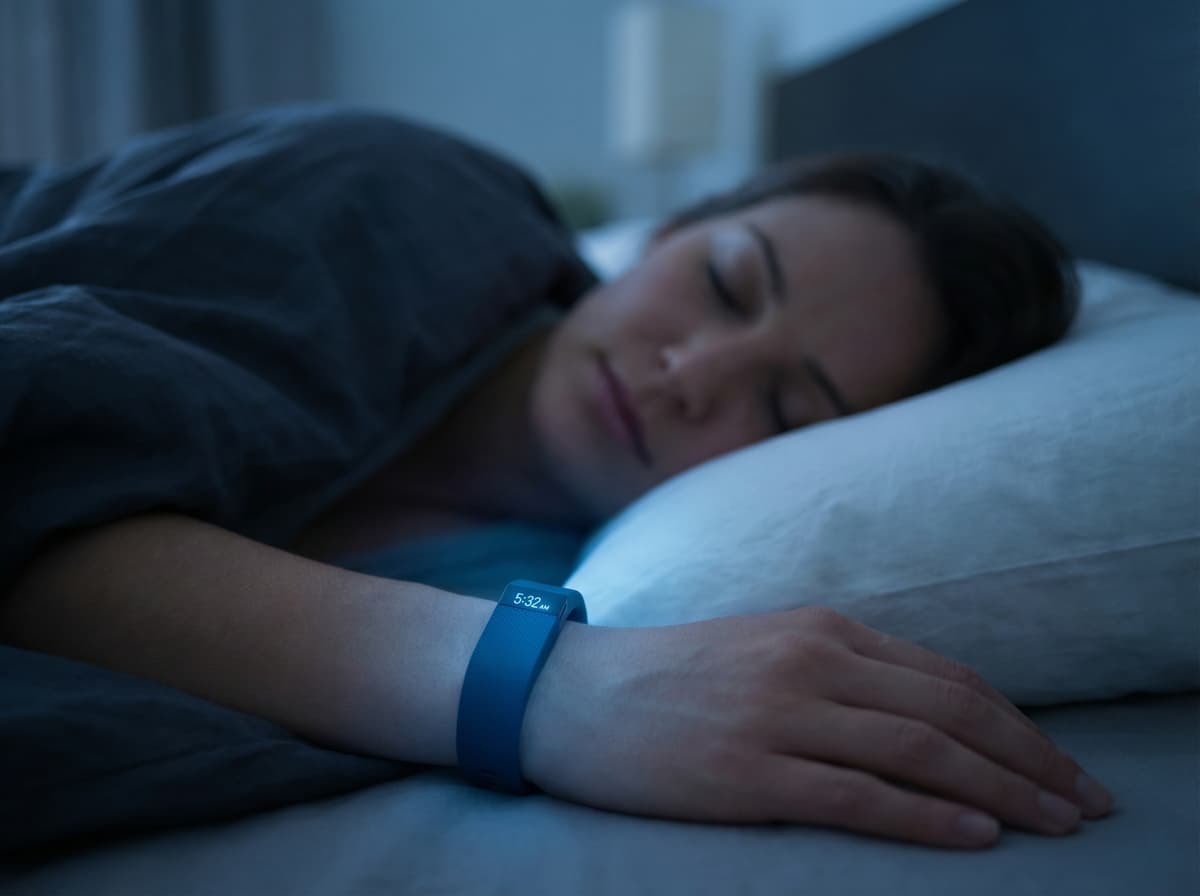
You had two glasses of wine with dinner. You fell asleep fast. You slept 7.5 hours. Your wearable says your recovery score is 22%. Your HRV dropped 30% overnight, your resting heart rate is 8 beats higher than baseline, and your deep sleep percentage looks fine but your REM sleep barely registers.
Your wearable already knows you had a drink. Here is exactly what the data shows, why it happens, and what the numbers mean for your next day.
What Happens to Your Sleep After Drinking
Alcohol is a sedative. That is not the same thing as a sleep aid. The distinction matters because sedation and sleep are different neurological states, and your wearable data proves it.
When you drink before bed, three things happen in sequence.
First, you fall asleep faster. A dose-response study published in Sleep Medicine Reviews (2024) found that for every 1 gram per kilogram of alcohol consumed, sleep onset latency decreases by 6.4 minutes. Two glasses of wine for a 70 kg person means you are out roughly 5-6 minutes faster than usual. This is why alcohol "helps" you sleep. It does not. It sedates you.
Second, your deep sleep increases in the first half of the night. Alcohol has a paradoxical sedative effect that temporarily boosts slow-wave sleep in the first 3-4 hours. Your wearable might show a strong deep sleep block early in the night. This is misleading. It is not restorative deep sleep in the same way your body naturally produces it. It is pharmacologically induced.
Third, your second half of the night falls apart. As your liver metabolizes the alcohol (roughly one standard drink per hour), your sleep architecture destabilizes. You wake more often. Your heart rate stays elevated. And your REM sleep, which is concentrated in the back half of the night, gets decimated.
The numbers are striking. A comprehensive meta-analysis found that REM sleep in the first half of a drinking night drops from a baseline of 17.26% to just 7.0%, a 59% reduction. REM sleep onset latency increases by 18 minutes. At moderate and high doses, total REM percentage across the entire night decreases significantly.
This is where the real damage happens. REM sleep is when your brain consolidates memories, processes emotions, and clears metabolic waste. Cutting it by more than half means you wake up having slept 7-8 hours but processed like you slept 4.
The HRV Crash
If your wearable tracks HRV, this is where the data gets uncomfortable.
A dose-response study published in the American Journal of Physiology measured the cardiac autonomic effects of alcohol with clinical precision. The findings: just two standard drinks decrease total HRV by 28-33%. High-frequency power, the component that reflects parasympathetic (rest-and-digest) activity, drops by 32-42%. The LF/HF ratio, which measures the balance between sympathetic and parasympathetic branches of your nervous system, increases by 98-119%.
In plain English: two drinks nearly double your body's stress response overnight. Your nervous system shifts from recovery mode into something closer to fight-or-flight. While you are unconscious, your body is working harder, not less.
This is why your morning HRV reading tanks after drinking. It is not a glitch. It is an accurate reflection of what happened inside your body for 6-8 hours while you thought you were resting.
The relationship is dose-dependent. One standard drink may be neutral or slightly positive for some people. Two or more consistently suppresses HRV across every study that has measured it. There is no version of "a few drinks" that your autonomic nervous system does not notice.
Your Resting Heart Rate Tells the Same Story
HRV gets the headlines, but resting heart rate paints the same picture from a different angle.
After drinking, your resting heart rate typically rises 3-10 beats per minute above baseline. Your body is metabolizing alcohol, managing dehydration, and dealing with the vasodilatory effects of ethanol. Your cardiovascular system is doing overtime.
Body temperature shifts, too. Alcohol disrupts your natural temperature rhythm by causing peripheral vasodilation (that warm flushed feeling), which actually accelerates core heat loss. Your wearable's temperature data may show an unusual deviation from baseline, particularly in the first half of the night.
When you stack these signals together, the pattern becomes unmistakable: elevated heart rate plus suppressed HRV plus disrupted temperature rhythm plus fragmented sleep architecture. Each metric tells a piece of the story. Together, they tell the whole story.
The Dose-Response Reality
Not all drinking is equal, and the research is specific enough to quantify the difference.
| Dose | Sleep Onset | Deep Sleep (First Half) | REM Sleep | HRV Impact | Recovery Impact |
|---|---|---|---|---|---|
| 1 standard drink | ~3 min faster | Minimal change | Minimal change | Neutral to slight decrease | Low |
| 2 standard drinks | ~5-6 min faster | Increased (sedative effect) | 30-40% decrease | 28-33% decrease | Moderate |
| 3+ standard drinks | ~8-10 min faster | Increased (sedative effect) | 50-60% decrease | 33%+ decrease | Severe |
| Heavy session (4+) | Rapid onset | Significant increase | Near-total suppression | Severe suppression | Next-day impaired |
The threshold sits squarely at two drinks. Below that, the effects are often within normal daily variation. Above that, every additional drink amplifies the disruption.
One important nuance: "standard drink" means 14 grams of pure alcohol. That is 12 oz of beer, 5 oz of wine, or 1.5 oz of spirits. Most restaurant pours are significantly larger than a standard drink. The 6 oz glass of wine you had at dinner was closer to 1.2 standard drinks. Two of those is 2.4 standard drinks, firmly in the "significant impact" territory.
Timing matters, too. Alcohol consumed 4+ hours before bed has less impact than a nightcap. Your liver clears roughly one standard drink per hour. The closer to bedtime you drink, the more your sleep architecture pays the price.
REM Sleep: Where the Real Damage Happens
REM sleep deserves its own section because it is the metric that takes the hardest hit, and the consequences are the least visible until they accumulate.
REM sleep is when your brain consolidates memories, processes emotional experiences, clears metabolic waste through the glymphatic system, and performs the neural maintenance that supports learning and creativity. It makes up about 20-25% of a healthy night's sleep, and roughly 60% of your total REM sleep occurs in the second half of the night, concentrated in the last 2-3 sleep cycles.
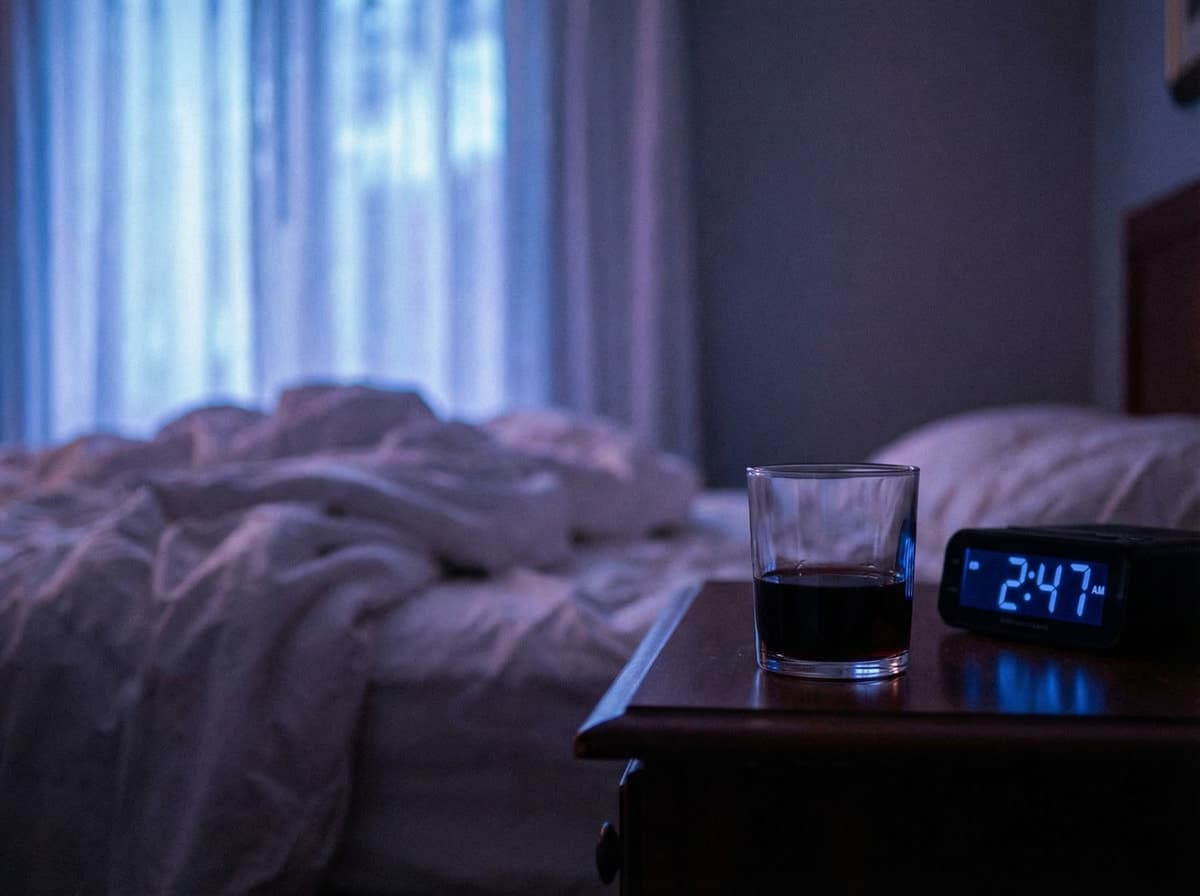
Alcohol selectively destroys this back half. The sedative effect of ethanol pulls you into deeper sleep early but suppresses REM throughout the night. As the alcohol metabolizes (typically 4-5 hours after your last drink), you enter a period of fragmented, shallow sleep where your body attempts REM rebound, often producing vivid or disturbing dreams. This is the 3-4 AM wakeup that drinkers know well.
The cascade of REM deprivation affects you the next day in ways that are hard to distinguish from "just being tired": intensified negative emotions, reduced ability to handle stress, impaired learning and problem-solving, and lower tolerance for frustration. One night of 59% REM reduction will not create permanent damage. But regular moderate drinking means regular REM suppression, and the cognitive and emotional effects build quietly over weeks.
The Next-Day Recovery Hangover
The effects do not stop when you wake up.
Your morning HRV reading after a night of drinking is suppressed, but the suppression often continues into the afternoon and sometimes into the next night. Research on HRV recovery timelines shows that for occasional drinkers (2-3 drinks on a single occasion), HRV typically returns to baseline within 24-48 hours. During that window, your recovery capacity is measurably reduced.
What this means practically: if you drink on Saturday night and plan a hard workout Sunday morning, your data will show that your body was not ready for it. Your heart rate will run higher at the same effort level. Your perceived exertion will be elevated. Your performance will be worse. And your recovery from that workout will take longer because your baseline recovery systems were already compromised.
This compounds. If you drink Friday and Saturday night, your HRV may not fully return to baseline until Tuesday. Three consecutive nights of moderate drinking can suppress HRV for the better part of a week.
What Cutting Back Actually Looks Like in the Data
The encouraging part is that the data moves fast in the right direction.
| Timeline | What Changes | What You Will See |
|---|---|---|
| Days 1-3 | Acute recovery begins | HRV rebounds toward baseline, RHR normalizes, sleep architecture restores |
| Days 3-7 | Short-term adaptation | Consistent HRV improvement, deeper sleep, more REM, lower RHR |
| Weeks 2-4 | Baseline shift | New higher HRV baseline establishes, sleep efficiency improves measurably |
| Months 1-4 | Full autonomic recovery | For heavy or long-term drinkers, cardiac autonomic function may take 4+ months to fully normalize |
A study on long-term alcohol use found that even after cessation, the heart takes at least 4 months to return to baseline HRV function. This does not mean casual drinkers need months to recover. If you typically have 2-3 drinks per week and cut to zero, you will likely see meaningful HRV improvements within 1-2 weeks.
The data is granular enough that many wearable users report being able to pinpoint exactly which nights they drank by looking at their weekly HRV trend. It is that visible. Two drinks on a Tuesday will create a clear dip in your Wednesday morning data that anyone can spot.
For people experimenting with cutting back, the wearable data becomes the most honest feedback loop available. You do not need willpower when you can see the numbers.
Alcohol and MotionSync
This is where fragmented data becomes a problem. Your Oura Ring shows HRV. Your Apple Watch shows sleep stages. Your Garmin shows resting heart rate. Each one tells part of the story, but none of them connect the dots for you.
MotionSync pulls data from all your wearables into one dashboard and uses an AI health coach to explain the patterns. When your HRV drops 30%, your RHR spikes 8 beats, and your REM sleep disappears on the same night, the coach connects those signals and explains what happened in plain English. No Googling, no guessing.
See what your recovery data actually means. Try MotionSync free.
FAQ
Does one drink really matter? For most people, one standard drink (12 oz beer, 5 oz wine, 1.5 oz spirits) has minimal measurable impact on HRV or sleep architecture. The threshold where consistent effects appear is two or more standard drinks. Individual variation exists based on body weight, genetics, and tolerance, but the research is clear that the dose-response curve steepens after the first drink.
Is beer different from wine or liquor? The effects are driven by ethanol content, not the type of drink. A standard drink of beer, wine, or spirits contains the same amount of alcohol (14 grams). The difference is that wine and cocktails are easier to over-pour, meaning you may consume more ethanol than you realize. A large glass of wine at a restaurant is often 8-9 oz, which is nearly two standard drinks.
How long before bed should I stop drinking? Your liver metabolizes roughly one standard drink per hour. To minimize sleep disruption, finish your last drink at least 3-4 hours before bed. Two drinks at 7 PM with a 11 PM bedtime gives your body enough time to clear most of the ethanol before your deepest sleep cycles begin.
Why do I feel like I sleep deeper after drinking? Alcohol increases slow-wave (deep) sleep in the first half of the night, which creates the subjective feeling of "sleeping hard." But this comes at the direct expense of REM sleep and second-half sleep quality. Your wearable data confirms this pattern: strong deep sleep early, fragmented and REM-depleted sleep later. The net result is worse total sleep quality despite feeling like you passed out immediately.
Will my HRV recover if I stop drinking? Yes. For occasional drinkers, HRV typically returns to baseline within 24-48 hours of a single drinking session. For regular drinkers who stop entirely, meaningful baseline improvements appear within 2-4 weeks. For heavy long-term drinkers, full autonomic cardiac recovery can take 4 or more months. The wearable data makes this recovery visible in real time.
Can alcohol affect my workout performance the next day? Directly. Suppressed HRV and elevated resting heart rate mean your body is still recovering from the alcohol before it starts recovering from exercise. Studies show that heart rate runs higher at the same effort level, perceived exertion increases, and post-workout recovery takes longer. If your wearable shows a low recovery score the morning after drinking, trust it.
Related Articles: