Why Am I Tired After 8 Hours of Sleep? What Your Wearable Is Trying to Tell You
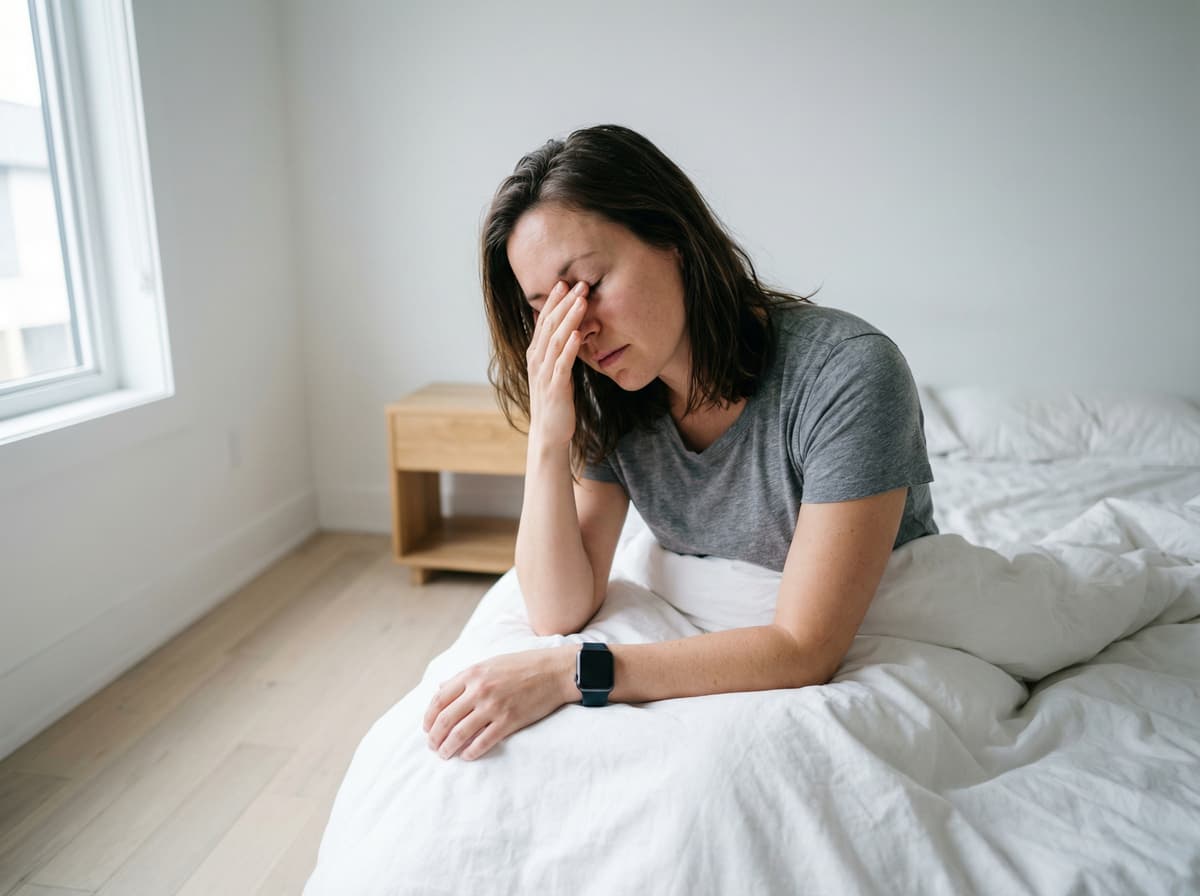
You went to bed on time. You got a full 8 hours. Your alarm goes off and you feel like you barely slept. Then you check your wearable and your recovery score says 34%. Something went wrong, but it was not your bedtime.
This is one of the most common frustrations in health tracking: doing everything "right" by the clock and still waking up drained. The answer is almost always the same. Sleep duration and sleep quality are two completely different things, and your body only recovers from the second one.
Sleep Duration Is Not Sleep Quality
When people say "I got 8 hours," they mean they were in bed for 8 hours. But being in bed and being asleep are different. And being asleep and getting restorative sleep are different again.
Your total sleep time breaks down into stages that cycle roughly every 90 minutes:
| Sleep Stage | What It Does | Typical % of Night |
|---|---|---|
| Light sleep (N1 + N2) | Transition and maintenance. Body temperature drops, muscles relax. | 50-60% |
| Deep sleep (N3) | Physical recovery, immune function, tissue repair, growth hormone release. | 13-23% |
| REM sleep | Memory consolidation, emotional processing, cognitive restoration. | 20-25% |
The ratio matters more than the total. An 8-hour night with 45 minutes of deep sleep and poor REM will leave you more exhausted than a 6.5-hour night with 90 minutes of deep sleep and healthy REM cycles.
A 2017 study published in Sleep Health found that sleep quality, measured by efficiency and architecture, predicted next-day fatigue and cognitive performance better than sleep duration alone. Getting more hours did not compensate for fragmented or shallow sleep.
What Your Recovery Score Is Actually Measuring
Most wearables calculate a recovery or readiness score using a combination of metrics, not just how long you slept. The inputs typically include:
- HRV (heart rate variability): How much variation exists between heartbeats during sleep. Higher HRV indicates your nervous system recovered well. Lower HRV suggests your body is still under stress.
- Resting heart rate: A lower resting heart rate during sleep generally indicates better recovery. A spike of 5 to 10 BPM above your baseline signals something disrupted the process.
- Sleep stage distribution: How much deep and REM sleep you actually got relative to your baseline.
- Respiratory rate: Changes in breathing patterns during sleep can signal illness, stress, or disrupted sleep architecture.
- Sleep efficiency: The percentage of time in bed that you were actually asleep. Below 85% is considered poor.
When your recovery score is low despite 8 hours in bed, it means one or more of these underlying metrics was off. The score is telling you something specific. The question is which metric dropped, and why.
7 Reasons You Slept 8 Hours and Still Feel Exhausted
1. You Got Enough Light Sleep But Not Enough Deep Sleep
Deep sleep is when your body does its heaviest repair work. Growth hormone peaks during N3 sleep. Your immune system releases cytokines. Tissue damage from the day gets addressed. If deep sleep gets cut short, none of that finishes.
The most common deep sleep killers:
- Alcohol within 3 hours of bed. A 2018 study in JMIR Mental Health found that even moderate alcohol consumption (two drinks) reduced deep sleep by 24%. Heavy consumption reduced it by 39.2%.
- Eating a large meal late. Digestion raises core body temperature, which directly opposes the body temperature drop required to enter deep sleep.
- Caffeine after 2 PM. Caffeine has a half-life of 5 to 6 hours. A coffee at 3 PM still has 50% of its caffeine in your system at 9 PM. A 2013 study in the Journal of Clinical Sleep Medicine found that caffeine consumed 6 hours before bedtime reduced total sleep time by over an hour and significantly reduced deep sleep.
- Screen exposure before bed. Blue light suppresses melatonin production by up to 50%, delaying the onset of deep sleep.
Your wearable can show you exactly how many minutes of deep sleep you logged. If you consistently get under 60 minutes on 8-hour nights, one of these factors is likely responsible.
2. Your HRV Dropped Overnight
HRV is the most sensitive overnight recovery signal your wearable tracks. It reflects the balance between your sympathetic ("fight or flight") and parasympathetic ("rest and digest") nervous systems.
When your body is recovering well during sleep, parasympathetic activity dominates and HRV is higher. When something disrupts recovery, sympathetic activity stays elevated and HRV drops.
Common causes of overnight HRV drops:
- Alcohol consumption (even 1 to 2 drinks)
- High-intensity exercise within 2 to 3 hours of sleep
- Emotional stress or anxiety
- Onset of illness (HRV often drops 24 to 48 hours before symptoms appear)
- Overeating before bed
- Dehydration
A 2020 study in Scientific Reports found that overnight HRV was the strongest single predictor of next-day perceived energy and cognitive performance, stronger than total sleep time or self-reported sleep quality.
If your HRV was 15 to 20% below your personal baseline, that alone explains why you feel drained regardless of hours slept.
3. You Woke Up More Than You Realized
Most people wake briefly during the night and do not remember it. These are called cortical arousals, brief shifts from deeper sleep to lighter sleep or full wakefulness lasting anywhere from 3 seconds to a few minutes. You will not remember awakenings shorter than about 5 minutes.
Your wearable tracks these. A healthy night includes 10 to 20 brief awakenings. More than 25 to 30 fragments your sleep architecture, preventing you from completing full 90-minute cycles.
Common causes of excessive awakenings:
- Sleep apnea: Each apnea event (breathing pause) triggers a micro-arousal to restart breathing. Moderate sleep apnea can cause 15 to 30 awakenings per hour.
- Ambient noise: Even sounds that do not fully wake you can shift your brain from deep to light sleep.
- Room temperature: Sleeping in a room above 70 degrees F increases awakenings. The optimal range is 60 to 67 degrees F.
- Pets or partner movement: Physical disturbances that register as motion on your tracker.
Check your wearable's sleep breakdown for "awake time" or "restlessness." If you see 30+ minutes of awake time scattered across an 8-hour night, fragmentation is likely the cause.
4. Your Sleep Timing Is Fighting Your Circadian Rhythm
When you sleep matters as much as how long you sleep. Your body's circadian clock regulates when each sleep stage is most available:
- Deep sleep concentrates in the first half of the night, roughly between 10 PM and 2 AM for most people.
- REM sleep concentrates in the second half, peaking in the early morning hours.
If you go to bed at 1 AM and wake at 9 AM, you get 8 hours. But you missed the window when deep sleep is most abundant. Your first sleep cycles were lighter, and you may have gotten significantly less deep sleep than someone who slept from 10:30 PM to 6:30 AM.
A 2019 study in the European Heart Journal analyzed over 88,000 participants and found that sleep onset between 10 PM and 11 PM was associated with the lowest risk of cardiovascular disease. Earlier or later sleep times carried higher risk, independent of sleep duration.
Social jet lag, the difference between your weekday and weekend sleep schedules, compounds this problem. Shifting your bedtime by 2+ hours on weekends disrupts your circadian rhythm for days afterward. Your wearable might show 8 hours on Sunday night but poor recovery scores through Tuesday.
5. You Are Carrying Sleep Debt
Sleep debt is the accumulated deficit between the sleep your body needs and the sleep you actually get. It does not reset with a single good night.
If you need 8 hours but averaged 6.5 hours Monday through Friday, you carry 7.5 hours of sleep debt into the weekend. One 8-hour night on Saturday does not erase that deficit. Research from the National Academy of Sciences (2003) found that chronic sleep restriction to 6 hours per night produced cognitive impairments equivalent to staying awake for 48 hours straight, and subjects consistently underestimated how impaired they were.
Your body tries to pay back sleep debt by increasing deep sleep on subsequent nights, a phenomenon called sleep rebound. But full recovery from a week of restricted sleep takes multiple nights of adequate sleep, not just one.
If your wearable shows a trend of 6 to 7 hour nights all week followed by an 8-hour night where you still feel terrible, sleep debt is the explanation. Look at your 7-day average sleep duration rather than any single night.
6. Stress Is Keeping Your Nervous System Activated
You can lie in bed for 8 hours with your eyes closed while your nervous system runs at full alert. Psychological stress activates the hypothalamic-pituitary-adrenal (HPA) axis, elevating cortisol. Elevated cortisol at night:
- Suppresses melatonin production
- Reduces deep sleep percentage
- Increases awakenings and time in light sleep
- Lowers HRV throughout the night
The result is sleep that looks adequate on the clock but registers as non-restorative on every metric your wearable tracks. Your resting heart rate stays elevated. Your HRV stays low. Your deep sleep drops. Your recovery score reflects the reality your perception missed: your body never actually shifted into recovery mode.
A 2015 meta-analysis in Sleep Medicine Reviews found that psychological stress was the strongest modifiable predictor of subjective sleep quality, more impactful than caffeine, alcohol, or exercise timing.
7. You Might Be Getting Sick
One of the most practical uses of overnight wearable data is catching illness before symptoms appear. When your immune system activates against a pathogen, your body diverts energy toward the immune response. This shows up as:
- A resting heart rate 3 to 8 BPM above your baseline
- HRV 15 to 30% below your baseline
- Elevated body temperature (even 0.2 to 0.5 degrees F above normal)
- Increased respiratory rate
- More time in light sleep, less in deep and REM
If you slept 8 hours, feel exhausted, and your recovery score is unusually low with no obvious lifestyle explanation (no alcohol, no late caffeine, no intense exercise), check whether your wearable shows elevated resting heart rate and suppressed HRV over the last 2 to 3 nights. That combination is often the earliest signal of an incoming cold, flu, or infection.
A 2022 study in Nature Medicine using data from over 30,000 Fitbit users found that wearable-detected physiological changes (elevated heart rate, reduced HRV, increased skin temperature) identified COVID-19 infections an average of 2 days before symptom onset.
What to Actually Do About It
Check Your Data, Not Your Clock
Stop measuring sleep success by hours alone. Open your wearable app and look at:
- Deep sleep minutes. Are you consistently getting 60+ minutes? If not, investigate what is suppressing it.
- HRV trend. Is your overnight HRV stable, trending up, or dropping? Compare the last 7 days, not just last night.
- Sleep efficiency. What percentage of your time in bed was actual sleep? Below 85% means too much time awake.
- Resting heart rate. Is it at or below your 30-day baseline? A spike above baseline signals incomplete recovery.
- Awakenings. How many times did you wake? More than 25 to 30 brief awakenings indicates fragmentation.
Fix the Highest-Impact Factor First
The most common culprits in order of impact:
- Alcohol. Even moderate drinking suppresses deep sleep and HRV. Try 2 weeks without alcohol and compare your recovery scores.
- Caffeine timing. Move your cutoff to noon for one week and track the difference.
- Consistent bedtime. Keep the same sleep and wake time within 30 minutes, including weekends.
- Room temperature. Drop it to 65 degrees F.
- Screen cutoff. Stop screens 60 minutes before bed or use blue light filtering.
Track the Trend, Not the Day
A single bad night means nothing. A pattern over 7 to 14 days means everything. If your recovery score has been below 50% for a week straight while logging 7 to 8 hours per night, something systemic is happening. That is when the data becomes genuinely useful for making a change.
How MotionSync Helps You Make Sense of This
The challenge with most wearable apps is that they show you the data without explaining what it means together. Your Oura shows deep sleep. Your Garmin shows HRV. Your Apple Watch shows resting heart rate. But no single app connects the dots: "Your deep sleep has been declining for 10 days, your HRV is trending down, and your resting heart rate just spiked. Here is what is likely happening and what to do about it."
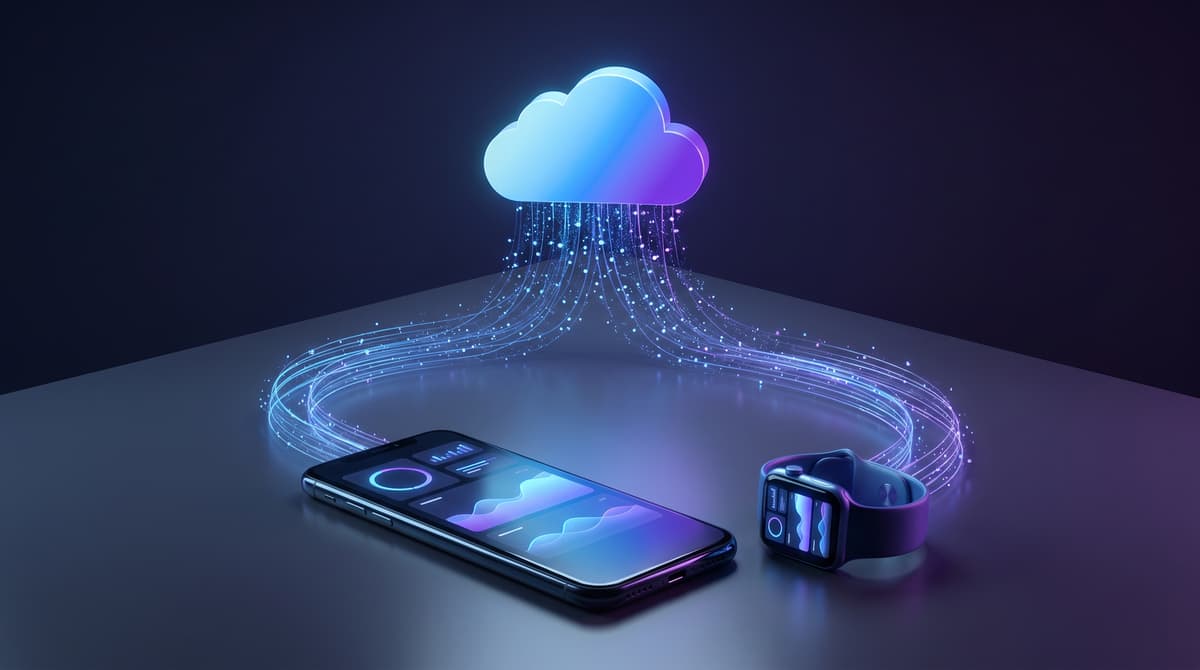
MotionSync pulls data from all your devices into one dashboard. The AI health coach analyzes the patterns across metrics and explains, in plain English, why your recovery score is low even though you slept 8 hours. It identifies the specific factor most likely responsible based on your data, not a generic article.
Instead of opening three apps and guessing, you get one clear picture with a specific recommendation.
FAQ
Is 8 hours of sleep enough for everyone? Not necessarily. Sleep need varies by individual. Most adults need 7 to 9 hours, but some people genuinely need closer to 9. Genetics play a role. The real test is not hours but whether you wake feeling rested with a strong recovery score. If 8 hours consistently leaves you drained, you might need more, or you might need better quality within those 8 hours.
Can my wearable accurately measure sleep stages? Consumer wearables estimate sleep stages using movement and heart rate data. They are not as precise as a clinical polysomnography (sleep study), which uses brain wave monitoring. However, modern devices from Oura, Garmin, Apple Watch, and Fitbit have been validated to within 80 to 90% agreement with clinical sleep staging for most users. They are accurate enough to track trends over time.
Why is my recovery score different on two devices? Each brand uses a different formula. Oura weights HRV and body temperature heavily. WHOOP emphasizes HRV and respiratory rate. Garmin factors in stress and training load. The specific number varies, but the trend should be similar across devices. If all your devices show low recovery, the signal is real.
How long does it take to recover from sleep debt? It depends on how much debt you carry. A few nights of mild restriction (6 to 7 hours) can recover in 2 to 3 good nights. Chronic sleep debt accumulated over weeks or months takes longer. Research suggests full cognitive recovery from chronic restriction requires multiple weeks of consistent 8+ hour nights.
Should I take a nap if my recovery score is low? A 20 to 30 minute nap before 2 PM can help restore alertness without disrupting nighttime sleep. Avoid napping longer than 30 minutes or later than 3 PM, as both can reduce your ability to fall asleep at night and perpetuate the cycle.
Does exercise improve or hurt sleep quality? Regular moderate exercise improves sleep quality significantly. A 2015 meta-analysis found that exercise increased deep sleep by 10 to 15% in previously sedentary adults. However, high-intensity exercise within 2 to 3 hours of bedtime can elevate heart rate and cortisol, temporarily worsening sleep quality. Morning or early afternoon exercise tends to produce the best sleep outcomes.
When should I see a doctor about poor sleep quality? If you consistently log 7 to 8 hours of sleep, maintain good sleep hygiene, and still wake exhausted with low recovery scores for more than 2 to 3 weeks, consult a healthcare provider. Persistent poor sleep quality despite adequate duration can indicate sleep apnea, restless leg syndrome, thyroid dysfunction, or other medical conditions that benefit from professional evaluation.
Related Articles:
About the author

Written by MotionSync Team
Editorial Team
The MotionSync editorial team writes about wearable data, recovery, sleep, and heart health in plain English. Articles draw on peer-reviewed research and the metrics your wearable already tracks. Content is for general education and is not a substitute for medical advice.