Blood Oxygen Levels: What SpO2 Means and When to Pay Attention
Somewhere in your wearable's health dashboard is a number labeled "SpO2" or "Blood Oxygen." It says 97%. You have never thought about it. Here is why it is worth understanding.
Blood oxygen is the one metric your body fights hardest to keep stable. Your heart rate can swing 40 BPM in a single workout. Your HRV can drop 20 ms after a bad night of sleep. But your blood oxygen stays locked between 95% and 100% nearly all the time. When it drops below that range, something meaningful is happening.
What SpO2 Actually Measures
SpO2 (peripheral oxygen saturation) is the percentage of hemoglobin in your blood that is carrying oxygen. Hemoglobin is the protein in red blood cells that binds to oxygen in your lungs and delivers it to every cell in your body. An SpO2 of 97% means 97% of your hemoglobin molecules are loaded with oxygen.
Your body needs that oxygen for energy production, cellular repair, and organ function. The brain alone consumes about 20% of your body's oxygen supply despite being only 2% of your body weight. When oxygen delivery drops, your body responds quickly: heart rate increases, breathing deepens, and blood vessels dilate to compensate.
There are two ways to measure it:
- Arterial blood gas (ABG) test: A clinician draws blood directly from an artery. The gold standard. Measures partial pressure of oxygen (PaO2) and exact saturation. Requires a medical setting.
- Pulse oximetry: A sensor shines red and infrared light through your skin. Oxygenated and deoxygenated hemoglobin absorb these wavelengths differently, and the ratio determines your SpO2 percentage. This is what your wearable uses.
Normal Blood Oxygen Ranges
For most healthy people, normal SpO2 falls between 95% and 100%. Within that range, individual baselines vary slightly. Some people consistently read 97 to 98%. Others sit at 99 to 100%. Both are normal.
| SpO2 Range | What It Means |
|---|---|
| 95-100% | Normal for healthy individuals |
| 93-94% | Below normal. Worth monitoring. Context matters. |
| 90-92% | Low. Warrants medical attention. |
| Below 90% | Hypoxemia. Seek medical care. |
Age does not change the normal range. A healthy 70-year-old and a healthy 25-year-old should both read between 95% and 100%. If an older adult consistently reads below 95%, it signals a condition, not aging.
Altitude is the main environmental exception. At 8,000 feet, SpO2 commonly drops to 90 to 95% in healthy people because there is less oxygen in the air. At 14,000 feet, readings in the mid-80s can be expected. A 2024 study found that smartwatch SpO2 measurements remained accurate across altitudes, with RMSE of 0.19% to 0.81%, well within the ISO medical threshold of 3%.
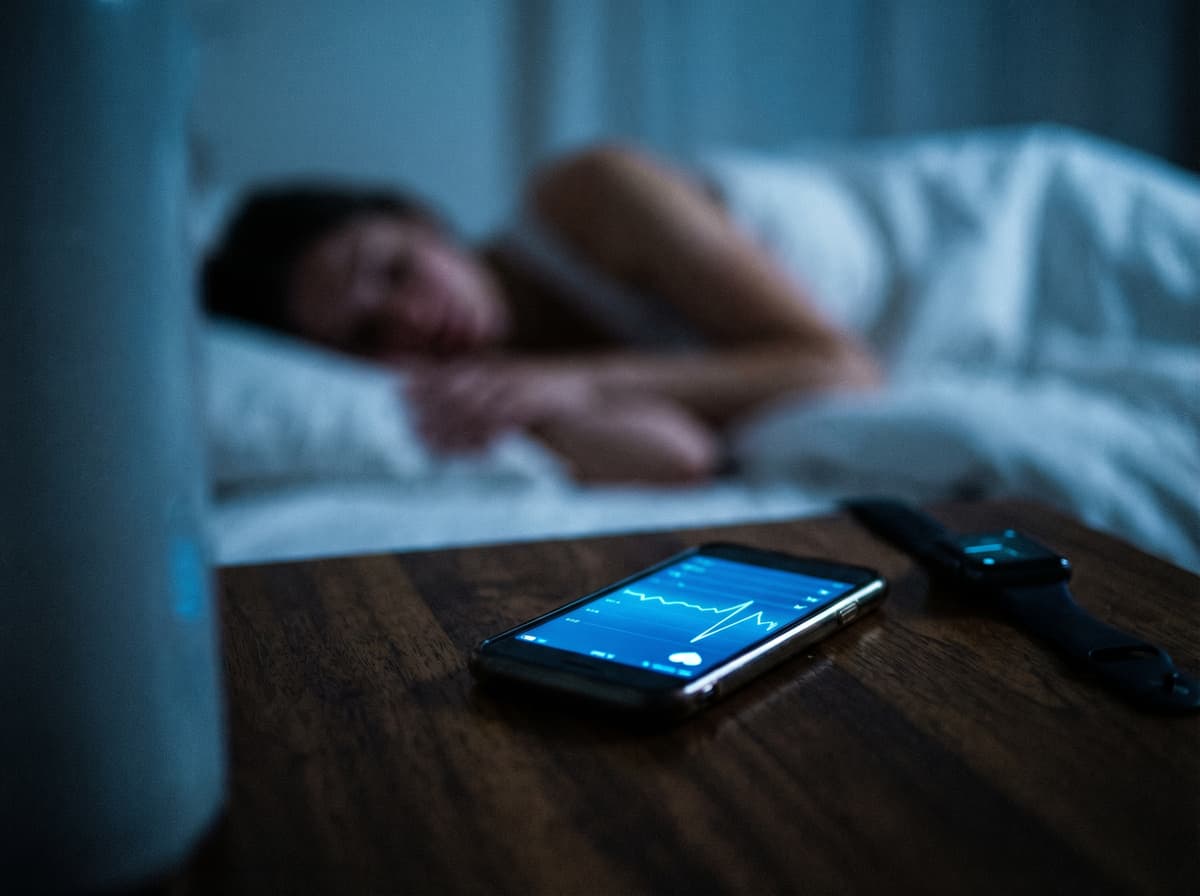
Why Your Wearable Tracks SpO2 While You Sleep
Most wearables measure SpO2 overnight rather than continuously throughout the day. There is a good reason for this.
During the day, motion artifacts from arm movement corrupt the optical signal. At night, your body is still, your activity level is consistent, and readings are far more reliable. Sleep is also when the most clinically relevant SpO2 events happen.
Sleep apnea detection is the primary clinical use case. Obstructive sleep apnea causes repeated drops in blood oxygen throughout the night as the airway collapses and breathing pauses. These desaturation events, where SpO2 drops 3 to 4% or more from baseline repeatedly, are a hallmark of the condition. An estimated 80% of moderate to severe sleep apnea cases are undiagnosed, and overnight SpO2 tracking from wearables is one of the earliest signals available outside a sleep clinic.
Your wearable typically reports two things:
- Average overnight SpO2: Your mean blood oxygen across the full sleep period. Should be 95% or above.
- SpO2 variability or dips: How much your oxygen fluctuated. Frequent dips may suggest breathing disturbances.
What Causes Low Blood Oxygen
Breathing and Lung Conditions
- Sleep apnea: The most common cause of overnight SpO2 drops. Repeated airway obstruction during sleep causes cyclical desaturations.
- Asthma: Airway constriction reduces oxygen exchange.
- Pneumonia: Fluid or infection in the lungs impairs gas exchange.
- COPD (emphysema, chronic bronchitis): Long-term lung damage reduces oxygen absorption capacity.
- COVID-19 and respiratory infections: Viral infections can cause significant SpO2 drops, sometimes before other symptoms appear. This was one of the earliest clinical observations during the pandemic.
Circulatory Conditions
- Anemia: Not enough red blood cells or hemoglobin to carry oxygen. Iron deficiency is the most common cause.
- Congenital heart conditions: Structural heart problems that reduce oxygenation.
- Poor circulation: Reduced blood flow to extremities affects oxygen delivery.
Environmental and Lifestyle Factors
- High altitude: Less atmospheric oxygen at elevation.
- Smoking: Damages lung tissue and reduces oxygen absorption over time. Carbon monoxide from cigarettes also binds to hemoglobin, displacing oxygen.
- Poor sleep position: Sleeping flat on your back can worsen airway obstruction in people prone to sleep apnea.
How Accurate Is Your Wearable at Measuring SpO2?
Consumer wearables use the same core technology as medical pulse oximeters (red and infrared light through skin), but with important accuracy differences.
Validation Data
| Device | Mean Absolute Error | Notes |
|---|---|---|
| Apple Watch Series 7 | 2.2% | Closest to reference standard in comparative study |
| Apple Watch Series 6 | 95% limits: -2.7% to +5.9% | Outliers up to 15% reported |
| Garmin Venu 2s | 5.8% | Farthest from reference. Frequent underestimation. |
| WHOOP 4.0 | Dual wavelength (red + infrared) | Measures during sleep only |
| Oura Ring | Infrared SpO2 sensor | Overnight tracking, limited published validation |
Apple Watch showed stronger agreement with clinical instruments than Garmin, Fitbit, and Withings devices in a 2023 comparative analysis. Ring-based devices like Oura have a potential signal quality advantage from finger placement, though published SpO2 validation data is limited compared to heart rate and HRV accuracy studies.
Important Limitations
- Skin tone affects accuracy. Deeper skin tones can reduce the reliability of optical SpO2 readings. The FDA has acknowledged this limitation in consumer and medical pulse oximeters.
- Motion corrupts readings. This is why overnight measurement during sleep is preferred.
- Fit matters. A loose wearable produces unreliable readings. The sensor must maintain consistent contact with skin.
- Tattoos over the sensor area can interfere with light absorption.
- Single readings are noisy. One overnight dip to 93% does not mean you have a problem. Patterns over weeks are what matter.
The Right Way to Use This Data
Wearable SpO2 is a screening tool, not a diagnostic one. Use it to spot trends over time. If you see consistent readings below 95%, frequent overnight dips, or a downward trend from your baseline, bring that data to your doctor. A single low reading on one night is not actionable.
Symptoms of Low Blood Oxygen
If your SpO2 drops significantly, your body tells you:
- Shortness of breath or rapid breathing
- Elevated heart rate
- Headaches and dizziness
- Confusion or difficulty concentrating
- Restlessness or feeling of unease
- Chest tightness
- Cyanosis (bluish tint to lips, fingertips, or nail beds) in severe cases
Many of these symptoms overlap with anxiety, dehydration, or overexertion. If they persist or worsen, check your SpO2 and consult a doctor.
How to Support Healthy Blood Oxygen Levels
These are not quick fixes for clinical conditions. They are lifestyle practices that support oxygen delivery in healthy people.
Breathe better. Diaphragmatic breathing (belly breathing) uses the full capacity of your lungs. Most people breathe shallowly into the chest, leaving the lower lobes underused. Practicing 5 to 10 minutes of slow, deep belly breathing daily improves ventilation efficiency.
Exercise regularly. Cardiovascular exercise strengthens the heart muscle and improves oxygen delivery efficiency. Over time, aerobic fitness increases the body's ability to extract and use oxygen from each breath.
Address iron intake. Iron is the core component of hemoglobin. Without enough iron, your blood cannot carry oxygen efficiently even if your lungs work perfectly. Good sources: spinach, lentils, lean red meat, fortified cereals. Pair with vitamin C to improve absorption.
Stay hydrated. Dehydration thickens blood and reduces plasma volume, making oxygen transport less efficient.
Fix your posture. Slouching compresses the diaphragm and reduces lung expansion. Sitting and standing upright allows full lung capacity.
Stop smoking. Smoking damages lung tissue and fills hemoglobin with carbon monoxide instead of oxygen. Quitting improves oxygen delivery within days.
SpO2 and MotionSync
MotionSync tracks your overnight SpO2 across all your connected wearables and shows you patterns over time. Instead of checking one device's overnight reading and wondering what it means, you see your blood oxygen trends alongside your sleep stages, HRV, and resting heart rate. If your SpO2 dips consistently on nights after alcohol or during a bout of illness, the AI coach connects the dots and tells you what to pay attention to.
See the full picture of your overnight health. Try MotionSync free.
FAQ
Q: What is a normal blood oxygen level? A: 95% to 100% for healthy individuals at sea level, regardless of age. Individual baselines vary slightly within that range. Consistent readings below 95% warrant medical attention.
Q: Should I worry about a single low SpO2 reading? A: No. A single dip to 93% or 94% can happen from sensor placement, movement during sleep, or momentary breathing patterns. Look for patterns over multiple nights. Consistent low readings or frequent dips are what matter.
Q: Can my wearable detect sleep apnea? A: Wearables can flag potential signs of sleep-disordered breathing through overnight SpO2 variability and frequent desaturation events. They cannot diagnose sleep apnea. A formal sleep study (polysomnography) is required for diagnosis. But wearable data can be the signal that prompts you to get tested.
Q: Does SpO2 change during exercise? A: In healthy people, SpO2 typically stays above 95% even during intense exercise because the body compensates with faster breathing and heart rate. Elite athletes pushing maximum effort may see brief dips to 93 to 95% (exercise-induced hypoxemia), which is considered normal at extreme intensities.
Q: Why does my SpO2 drop at altitude? A: There is less oxygen in the air at higher elevations. At 8,000 feet, SpO2 of 90 to 95% is common. The body acclimatizes over days by producing more red blood cells and increasing breathing rate.
Q: Is SpO2 or HRV more useful for daily health tracking? A: They serve different purposes. HRV reflects your autonomic nervous system's daily readiness and responds to stress, sleep, and recovery. SpO2 reflects respiratory and circulatory health and is most useful as a screening tool for sleep-disordered breathing or illness. HRV changes daily. SpO2 should stay stable. Both are worth tracking.
Related Articles:
About the author

Written by MotionSync Team
Editorial Team
The MotionSync editorial team writes about wearable data, recovery, sleep, and heart health in plain English. Articles draw on peer-reviewed research and the metrics your wearable already tracks. Content is for general education and is not a substitute for medical advice.