How AI and Wearables Are Filling the Gaps Your Doctor Cannot
You see your doctor once a year. Maybe twice. The appointment lasts 15 minutes. You answer a few questions, get some bloodwork, and leave with vague advice to eat better and exercise more. Then you go back to living your life for the other 364 days with zero medical guidance.
This is not a failure of your doctor. It is a failure of the system. Traditional healthcare was designed for acute care: you get sick, you go in, you get treated. It was never designed for continuous support. There is no mechanism for your physician to monitor your sleep quality on Tuesday night, notice your HRV trending down over the past week, or flag that your resting heart rate has been climbing since you started a new job.
That gap, the 364 days between appointments, is where AI and wearable technology are making the biggest impact on personal health. Not by replacing doctors, but by filling the space where doctors have never been present.
The Access Problem Is Bigger Than You Think
Even in cities with world-class hospitals, accessing timely primary care is difficult. Getting a same-day appointment with your physician is nearly impossible in most health systems. Mental health access can take weeks or months. Specialist referrals add more delays.
For most people, most of the time, the effective supply of healthcare is functionally zero. You have insurance. You have a doctor on file. But between your annual checkup and the next time you feel sick enough to make an appointment, no one is watching your health.
This is not a problem that more doctors can solve. The math does not work. There are roughly 1,000 patients per primary care physician in the United States, and the shortage is projected to grow. The system cannot scale to provide continuous, personalized health monitoring for every individual. It was never built for that.
What Wearables Changed
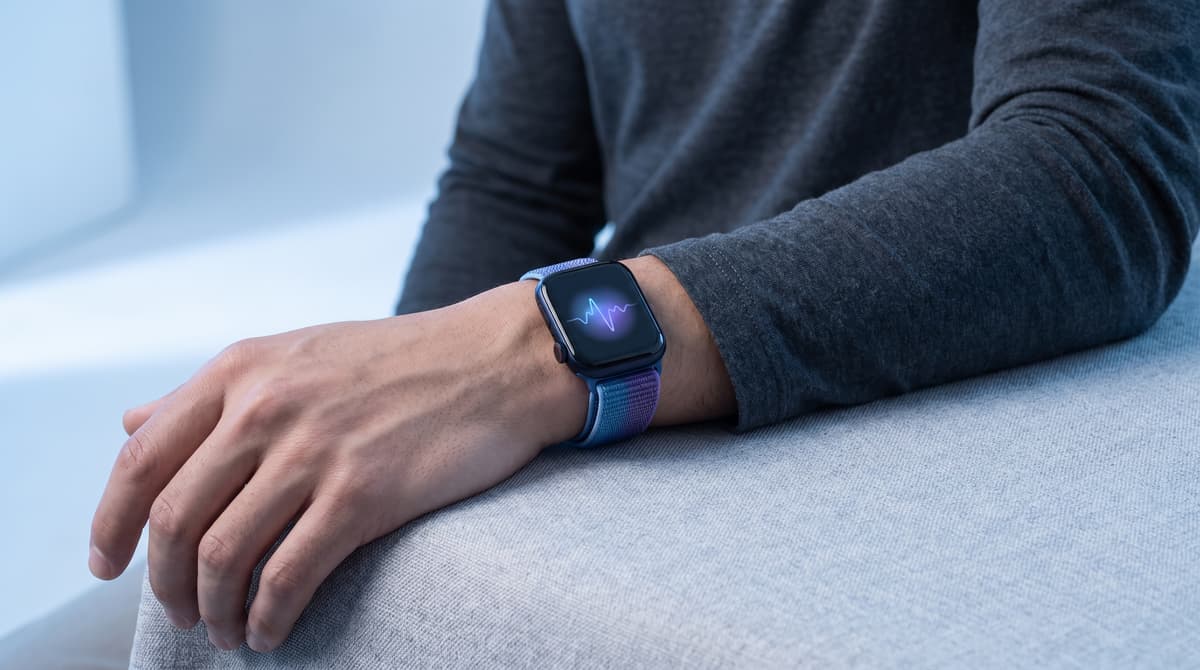
Wearable technology created something that did not exist before: a continuous, passive, 24/7 health monitoring layer that requires no appointments, no waiting rooms, and no insurance authorization.
Your wearable tracks:
- Heart rate throughout the day and night, every few seconds
- Heart rate variability (HRV) during sleep, the most sensitive marker of autonomic nervous system balance
- Sleep architecture including time in light, deep, and REM sleep plus awakenings
- Resting heart rate overnight, with trend data over weeks and months
- Respiratory rate during sleep, one of the most stable and clinically meaningful vital signs
- Blood oxygen (SpO2) overnight, relevant for sleep apnea detection and respiratory health
- Activity and steps providing context for recovery and training load
- Body temperature deviations from baseline, often an early illness indicator
A single night of sleep generates more continuous physiological data than a standard annual physical. Over a month, your wearable accumulates a health profile that no 15-minute appointment could replicate.
The problem was never data collection. The problem is interpretation.
The Interpretation Gap
Most wearable users check their data, see numbers, and have no idea what to do with them. Your Garmin says your HRV is 42. Your Oura says you got 55 minutes of deep sleep. Your Apple Watch says your resting heart rate was 64 last night. Is any of that good? Bad? Should you change anything?
A 2023 survey by Rock Health found that 56% of wearable owners check their data at least weekly, but only 18% feel confident interpreting what the numbers mean. The gap between data collection and actionable understanding is enormous.
This is the gap AI is built to fill.
How AI Turns Data Into Guidance
AI health coaching works by doing three things your wearable app alone cannot do:
1. Pattern Recognition Across Metrics
Individual metrics in isolation are noisy and hard to interpret. Your resting heart rate spiked 4 BPM last night. Is that alcohol? A hard workout? The onset of a cold? Impossible to tell from one number.
AI analyzes the combination. If your resting heart rate spiked while your HRV dropped 20%, your deep sleep halved, and your body temperature rose 0.2 degrees, the pattern is consistent with an immune response. An AI health coach can surface that connection in plain English without requiring you to cross-reference four different screens.
2. Personal Baseline Comparison
Population averages are nearly useless for individual health decisions. An HRV of 35ms is excellent for a 60-year-old and concerning for a 25-year-old endurance athlete. A resting heart rate of 70 BPM might be your normal or might be 10 BPM above your baseline.
AI builds a personal health profile over time. It learns your baselines, your typical ranges, your seasonal patterns, and your responses to specific behaviors. When something deviates from your normal, the AI flags it in the context of your data, not a population average.
3. Proactive Insights Without Prompting
This is the critical difference between an AI health coach and a general-purpose chatbot. A chatbot waits for you to ask a question. An AI health coach watches your data continuously and surfaces insights when they matter.
You should not have to ask "Why is my HRV low?" The system should tell you: "Your HRV has been declining for 4 days. Your sleep efficiency dropped below 80% twice this week. Based on your patterns, the most likely factor is the late caffeine consumption you logged on Monday and Wednesday. Consider moving your cutoff to before noon."
That is the difference between a tool you query and a coach that watches.
What AI Health Coaching Can and Cannot Do
What It Can Do
- Identify trends before you notice them. Your data often shows a problem 2 to 5 days before you feel it subjectively.
- Connect dots across metrics. Sleep, recovery, activity, and stress are interconnected. AI reads them as a system, not individual numbers.
- Personalize recommendations. "Get more sleep" is useless advice. "Your deep sleep has been under 50 minutes for a week. Based on your data, your 9 PM caffeine is the most likely cause" is actionable.
- Provide 24/7 availability. You can ask your AI coach why your recovery is low at 6 AM on a Saturday. Try that with your doctor.
- Track long-term progress. Is your cardiovascular fitness improving over 6 months? Is your sleep quality degrading? AI tracks the arc, not just the snapshot.
What It Cannot Do
- Diagnose medical conditions. AI health coaching is not medicine. It can flag patterns consistent with conditions like sleep apnea or overtraining, but diagnosis requires a healthcare provider.
- Replace acute care. If you are injured, sick, or experiencing a medical emergency, you need a doctor, not an app.
- Account for everything. Wearables do not track nutrition quality, hydration, medication interactions, or psychological state comprehensively. AI works with the data available and acknowledges gaps.
- Provide certainty. AI identifies patterns and probabilities. "Your data is consistent with early illness onset" is different from "you are getting sick." The nuance matters.
The Right Mental Model: AI as the Layer Between You and Your Doctor
The most useful way to think about AI health coaching is not as a replacement for medical care but as a continuous monitoring layer that makes your doctor visits dramatically more productive.
Imagine walking into your annual physical with 12 months of continuous data showing:
- Your resting heart rate has been declining steadily (cardiovascular fitness improving)
- Your HRV dipped significantly during a 3-week period in March (stressful project at work, recovered after)
- Your deep sleep has been declining since October (might correlate with seasonal changes or a new medication)
- Your respiratory rate elevated for 5 days in January (caught a cold, recovered normally)
That is a fundamentally different conversation than "How have you been feeling?" followed by "Pretty good, I think."
AI gives you and your doctor a shared dataset. The doctor brings clinical expertise and diagnostic capability. The AI brings 365 days of continuous observation. Together, they cover what neither can alone.
How to Use AI Health Tools Effectively
Based on the current state of the technology, here is how to get the most from AI health coaching:
Give It More Data, Not Less
The more devices and data sources you connect, the better the AI performs. A single wrist-worn tracker provides useful data. Adding a sleep-focused device like Oura Ring gives the AI cross-validated sleep metrics. Connecting your workout app provides training load context. Each source fills gaps.
Trust Trends, Not Snapshots
A single day's AI insight might be noise. A pattern identified over a week or more is almost always meaningful. Pay attention to insights that reference multi-day trends: "Your HRV has been declining for 5 days" carries more weight than "Your HRV was low last night."
Use It as a Starting Point, Not an Endpoint
If your AI coach flags a persistent pattern, like respiratory rate elevation for 10+ days or a sustained decline in sleep quality, that is useful information to bring to your doctor. The AI identified something worth investigating. Your doctor determines whether it requires medical attention.
Check In Daily, Act Weekly
Glance at your AI insights each morning for awareness. But make behavioral changes based on weekly patterns, not daily fluctuations. Most health metrics need 7 to 14 days of data before a trend is reliable enough to act on.
How MotionSync Approaches This
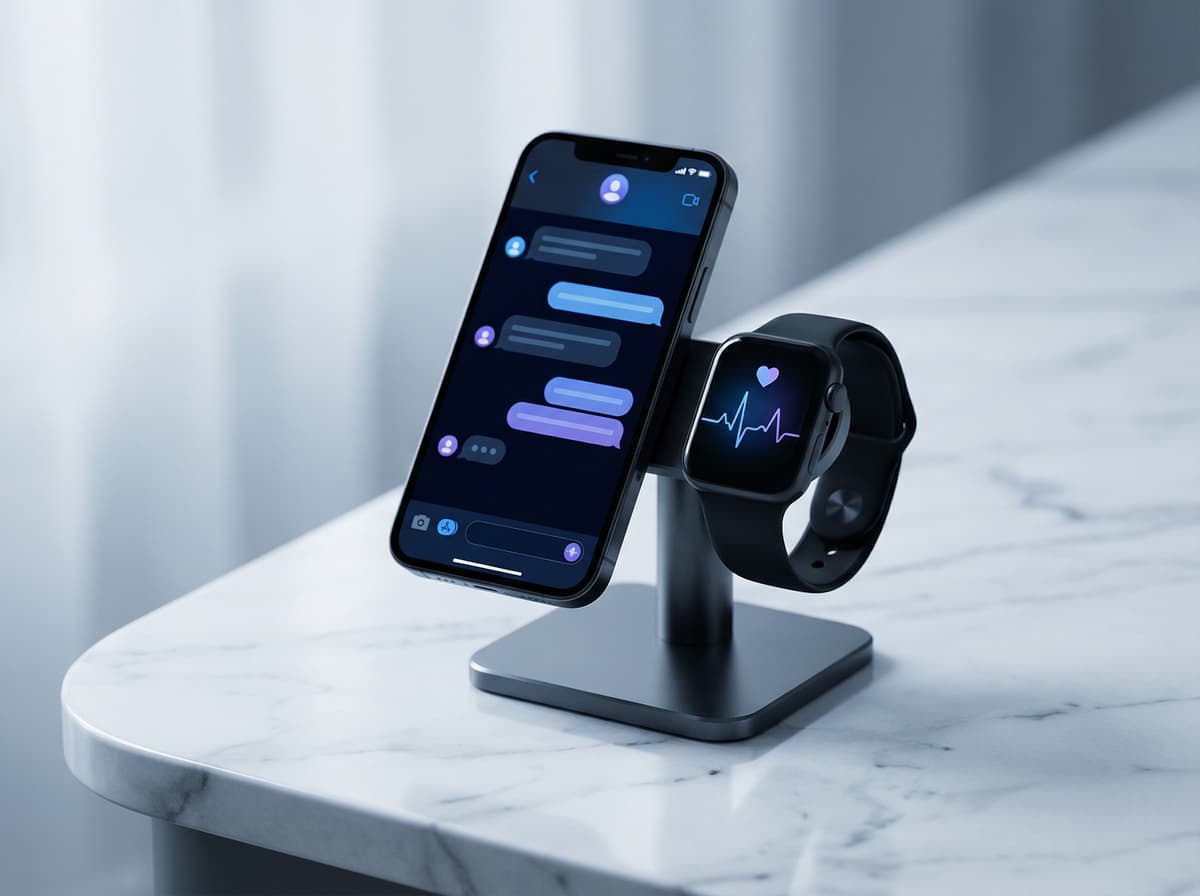
MotionSync was built specifically for this gap. It connects to Apple Health, Garmin, Oura Ring, Fitbit, and Google Fit, pulling your data from every device into one unified dashboard. The AI health coach analyzes patterns across all your metrics simultaneously and explains what it finds in plain English.
The difference from general-purpose AI (like asking ChatGPT about your health) is specificity. ChatGPT gives generic health advice based on population data. MotionSync's AI coach is grounded in your data, your baselines, and your trends. It does not start from zero every conversation. It builds a persistent health profile that gets more accurate over time.
You do not need to know the difference between RMSSD and SDNN. You do not need to cross-reference your Garmin's HRV Status with your Oura's readiness score. You do not need to remember what your resting heart rate was two weeks ago.
You check one app. You get one clear picture. And when something matters, the AI tells you before you have to ask.
FAQ
Is AI health coaching safe? AI health coaching that interprets wearable data is generally safe because it works with non-invasive, passive measurements. It does not prescribe medication, perform procedures, or make diagnostic claims. The risk profile is comparable to reading a health article, with the added benefit of personalization. As with any health tool, use it as one input alongside professional medical care, not as a substitute.
Can AI detect diseases from wearable data? AI can identify patterns in wearable data that are associated with certain conditions. Elevated respiratory rate and resting heart rate can signal respiratory infections. Cyclical oxygen desaturation patterns during sleep can suggest sleep apnea. Sustained HRV decline can indicate overtraining or chronic stress. However, detection is not diagnosis. If an AI flags a concerning pattern, follow up with a healthcare provider.
Why is an AI health coach better than just reading my wearable app? Your wearable app shows you individual metrics without connecting them. An AI health coach reads the combination. It knows that elevated resting heart rate plus suppressed HRV plus reduced deep sleep is a different signal than elevated resting heart rate alone. It also personalizes to your baselines, whereas your wearable app compares you to population averages.
How is this different from ChatGPT Health? ChatGPT Health is a general-purpose AI that can answer health questions. It starts fresh every conversation and works from population-level knowledge. An AI health coach like MotionSync is purpose-built for health data. It connects directly to your wearables, builds a persistent profile of your baselines, and proactively surfaces insights without requiring you to prompt it. It is the difference between googling a symptom and having a coach who watches your data every day.
Do I still need to see my doctor? Yes. AI health coaching complements medical care. It does not replace it. Annual physicals, bloodwork, vaccinations, screenings, and acute care all require a healthcare provider. What AI coaching does is make those visits more productive by giving you and your doctor continuous data instead of a snapshot.
What if the AI gives me wrong information? AI health coaching works in probabilities, not certainties. If the AI says your data is "consistent with" a stress response, it means the pattern matches what stress typically looks like in physiological data. It is not a guarantee. Always cross-reference with how you feel, consider context the AI might not have (like a new medication), and consult a doctor if something seems off.
Related Articles:
About the author

Written by MotionSync Team
Editorial Team
The MotionSync editorial team writes about wearable data, recovery, sleep, and heart health in plain English. Articles draw on peer-reviewed research and the metrics your wearable already tracks. Content is for general education and is not a substitute for medical advice.