Caffeine and Your Recovery Data: How Long That Coffee Actually Lasts
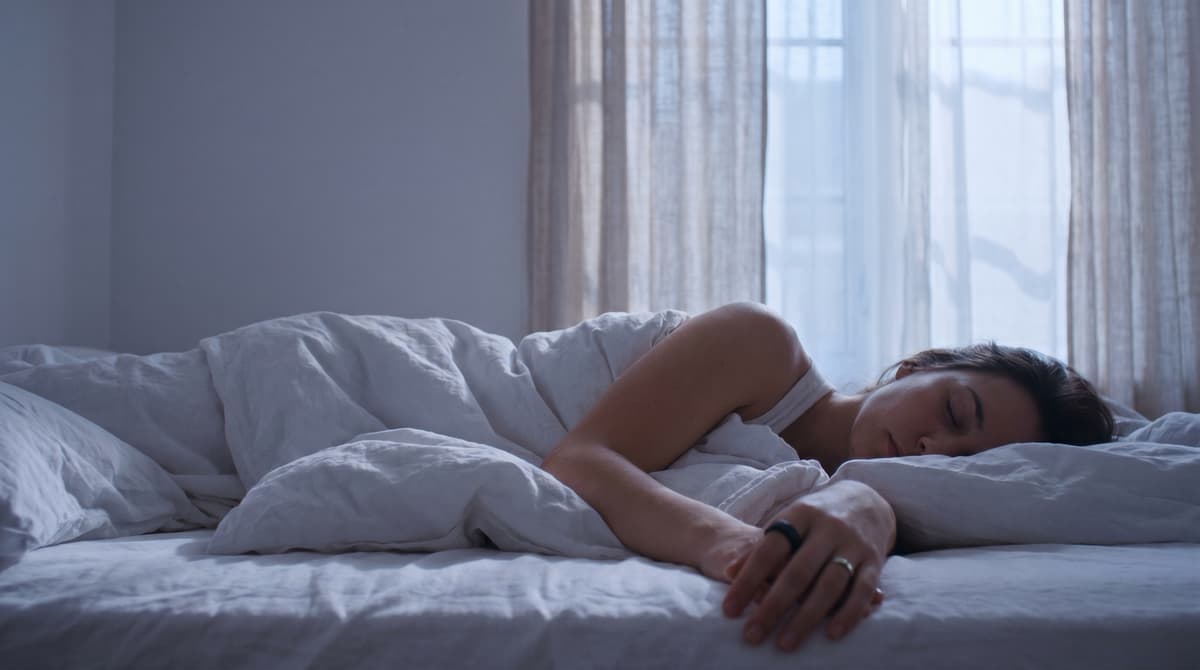
You finished your last coffee at 3 PM. By the time you climbed into bed at 11, you felt completely normal. No jitters, no buzz. So you slept.
Your wearable data tells a different story. Your deep sleep was 22 minutes shorter than usual. Your overnight HRV dropped 8%. Your resting heart rate was 4 BPM higher. Whatever you felt at bedtime, your body was still processing the caffeine you drank eight hours earlier, and the cost showed up in every recovery metric your wearable tracks.
Caffeine is the most widely used psychoactive substance on the planet, and most people radically underestimate how long it actually works. Here is what the research says, what your wearable can show you, and how to use the data to find a caffeine schedule that does not eat into your recovery.
How Long Caffeine Actually Stays in Your System
The number cited most often is that caffeine has a "half-life of 5 hours." That is roughly correct as a population average. The half-life is the time it takes for your body to eliminate half of the caffeine in your bloodstream. Half-life of 5 hours means that 5 hours after a 200 mg coffee, you still have 100 mg circulating. After 10 hours, 50 mg. After 15 hours, 25 mg.
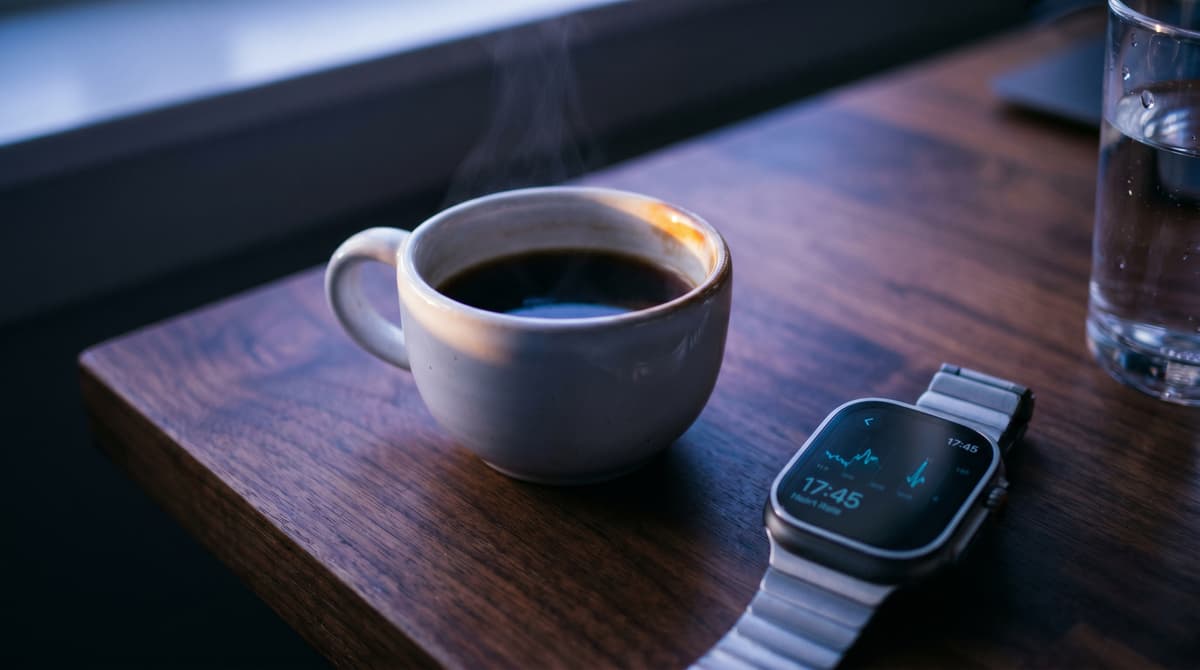
To put that in context, a single shot of espresso is about 65 mg of caffeine. A 12-ounce drip coffee is roughly 200 mg. An energy drink can hit 300 mg. A 3 PM coffee with 200 mg of caffeine leaves you with 50 mg in your bloodstream at 1 AM. That is the equivalent of drinking a fresh shot of espresso right before bed.
The half-life range is wide. A 2018 study in the British Journal of Clinical Pharmacology analyzed individual caffeine metabolism across over 600 adults and found half-lives ranging from 1.5 hours (very fast metabolizers) to over 9.5 hours (very slow metabolizers). The variation is mostly genetic, driven by polymorphisms in the CYP1A2 gene, which encodes the liver enzyme that breaks down caffeine.
Other factors that slow caffeine metabolism:
| Factor | Effect on Half-Life |
|---|---|
| Pregnancy | Doubles or triples to 10-15 hours |
| Oral contraceptives | Roughly doubles to 8-10 hours |
| Liver disease | Increases significantly |
| Older age | Slight increase |
| Smoking | Decreases (smoking induces CYP1A2) |
| Some medications (fluvoxamine, ciprofloxacin) | Can extend half-life dramatically |
If you take birth control pills and drink a coffee at 3 PM, you may still have over 100 mg of caffeine in your bloodstream when you go to bed. Your sleep data will show it.
What Caffeine Does to Sleep
Caffeine works by blocking adenosine receptors in the brain. Adenosine is the molecule that builds up during waking hours and creates the feeling of sleep pressure. The longer you have been awake, the more adenosine you have circulating, and the sleepier you feel. Caffeine fits into the same receptors and prevents adenosine from binding. The sleepiness signal is masked, but the adenosine itself is still accumulating in the background.
When the caffeine clears, adenosine flooding back to its receptors produces the well-known "caffeine crash." It also produces measurable changes in sleep when caffeine is still active at bedtime.
A landmark 2013 study in the Journal of Clinical Sleep Medicine gave participants 400 mg of caffeine at one of three times: 6 hours before bed, 3 hours before bed, or right at bedtime. Even the 6-hour-before group, who reported feeling completely normal at lights out, showed:
- 41 minutes less total sleep
- Significant reductions in deep sleep
- Increased awakenings during the night
- Lower self-reported sleep quality the next morning
The 3-hour and bedtime groups showed even larger effects. Crucially, the participants in the 6-hour group did not subjectively notice the disruption. They felt fine at bedtime, slept what felt like a normal night, and woke up unaware that they had lost most of an hour of sleep and a meaningful chunk of deep sleep.
This is the essential thing to understand about caffeine: the effects on your sleep are largely invisible to your conscious experience. Only objective measurement catches them.
What Your Wearable Can Show You
Sleep data alone does not always reveal caffeine effects clearly, because the changes can be subtle on a single night. The metrics that show caffeine impact most reliably are the autonomic nervous system markers your wearable tracks overnight.
Resting heart rate. Caffeine is a stimulant. It raises heart rate during the day and continues to suppress the normal nighttime drop in heart rate. A 2021 study in the Journal of the American Heart Association found that consuming caffeine within 6 hours of bedtime raised average overnight resting heart rate by 4 to 6 BPM compared to caffeine-free nights, in the same individuals.
Heart rate variability. HRV is a measure of parasympathetic (rest-and-recover) nervous system activity. Caffeine activates the sympathetic (fight-or-flight) branch and suppresses HRV. The effect is dose-dependent and persists as long as caffeine is metabolically active. In healthy adults, evening caffeine reduces overnight HRV by 8 to 18% on average.
Deep sleep duration. Most wearables track sleep stage breakdowns reasonably well. The most reliable sleep impact of late-day caffeine is a reduction in deep sleep, often 15 to 30 minutes less than baseline.
Sleep onset latency. Some wearables track time-to-fall-asleep. Caffeine extends this measurably, though the effect can be masked if you are sleep-deprived enough that you fall asleep regardless.
Wake events. Caffeine increases nighttime micro-awakenings, even ones you do not remember. If your wearable shows more interruption than usual, look at your last caffeine intake.
The best diagnostic experiment is simple: spend one week as your normal caffeinated self, then one week with no caffeine after noon. Compare the two weeks of overnight RHR, HRV, and deep sleep. The difference is often dramatic enough to change behavior permanently.
The Cortisol Curve and the Right Time to Drink Coffee
Cortisol, your body's primary alertness-and-stress hormone, follows a daily rhythm. It peaks roughly 30 to 45 minutes after waking, providing your natural morning alertness boost. It then declines through the day, with smaller secondary peaks around noon and 5 PM.
If you drink coffee during your cortisol peak, you stack a stimulant on top of your body's natural alertness response. The result is reduced caffeine effectiveness and faster tolerance development. Researchers have suggested that delaying caffeine until cortisol is on the downswing produces a more useful boost.
For most people who wake around 7 AM, this means:
- Worst time: 7:00-9:30 AM (during natural cortisol peak)
- Best time: 9:30-11:30 AM (after cortisol has started to decline)
- Acceptable second cup: 12:00-1:30 PM (during the noon cortisol dip)
- Diminishing returns: After 2 PM (caffeine still active at bedtime)
- Avoid: After 3 PM (consistent sleep impact for most people)
This is a guideline, not a law. The general principle holds across most adults: the later in the day, the higher the cost.
Caffeine and Sleep Pressure
Beyond direct sleep disruption, caffeine has a sneakier effect: it interferes with the buildup of the next day's sleep pressure.
Adenosine accumulates whenever you are awake. Caffeine blocks the receptors but does not stop the accumulation. When caffeine wears off, that backlog of adenosine all becomes active simultaneously, which is why you crash hard. But the long-term version of this is more interesting. Heavy chronic caffeine use can dampen your overall sleep drive, making it harder to fall asleep at a consistent time and reducing the depth of your sleep when you do.
A 2020 study in Sleep Medicine Reviews analyzed long-term caffeine consumption patterns and found that people consuming over 400 mg of caffeine per day chronically had:
- Higher sleep onset latency
- Reduced slow-wave sleep
- More fragmented sleep architecture
- Higher self-reported daytime fatigue (despite the caffeine)
The paradox is real. People drink more caffeine to fight fatigue caused in part by the caffeine itself.
Tolerance, Withdrawal, and the Reset
Tolerance to caffeine develops within roughly 7 to 12 days of consistent use. The body upregulates adenosine receptors to compensate for the chronic blockade, which means you need more caffeine to feel the same effect. This is why your morning coffee that used to wake you up no longer does.
Withdrawal symptoms (headache, fatigue, low mood, difficulty concentrating) typically peak 24 to 48 hours after the last dose and resolve within 5 to 9 days. Receptor density returns toward baseline over 1 to 2 weeks, restoring sensitivity.
A targeted reset can be useful periodically. Two strategies that work:
- The full reset. No caffeine for 14 days. Painful for the first week, but afterward your sensitivity is restored and a single morning coffee feels powerful again.
- The drift down. Cap intake at 100-200 mg per day for 2 to 3 weeks, taken only in the morning. Less brutal than a full reset and still restores most of the sensitivity benefit.
Either approach will be visible in your wearable data. HRV tends to climb 5 to 15% during the second week of reduced or eliminated caffeine. Deep sleep increases by 10 to 25 minutes per night on average. Resting heart rate drops 2 to 5 BPM.
The Caffeine + Alcohol Compounding Effect
If you drink a 4 PM coffee and then have two glasses of wine with dinner, the recovery cost compounds. Alcohol initially sedates but disrupts the second half of the night, particularly REM sleep. Caffeine extends sleep onset latency and suppresses deep sleep. Together they can transform a 7-hour night in bed into 4.5 hours of low-quality, fragmented sleep.
The wearable signature of this combination is unmistakable: elevated resting heart rate from the alcohol, suppressed HRV from both substances, reduced deep sleep from the caffeine, and reduced REM sleep from the alcohol. If you ever wonder why a Saturday night out wrecks you for two days, this is part of the answer.
How MotionSync Helps
Most wearable apps show you last night's sleep score and yesterday's recovery readiness, with no way to connect those numbers to specific behaviors. You drank an afternoon espresso, you had bad sleep, but the app does not connect them.
MotionSync pulls sleep, HRV, resting heart rate, and respiratory rate data from your connected devices (Apple Health, Oura Ring, Garmin, Fitbit, Google Fit) and lets you log behaviors that affect recovery, including caffeine timing. The AI health coach correlates your data over time and identifies your personal caffeine threshold.
If your data shows that coffees after 1 PM consistently drop your overnight HRV 12% below baseline while morning-only coffee days hold HRV steady, MotionSync surfaces that pattern: "On days you have caffeine after 1 PM, your overnight HRV averages 48 ms. On days you cut off by noon, it averages 56 ms. The difference is consistent over 6 weeks of data." Then it lets you decide what to do with that information.
One dashboard. Your real numbers. Plain explanations. You stop guessing and start adjusting.
FAQ
How late is too late for coffee? For most people, anything after 2 PM produces measurable sleep impact. Slow caffeine metabolizers may need to cut off by noon. The simplest test is a one-week experiment: stop caffeine after noon for 7 days and compare your wearable data to the prior week. The numbers will tell you.
Does decaf still affect sleep? A standard decaf still contains 2 to 15 mg of caffeine per cup, compared to roughly 100 mg in regular drip coffee. For most people the dose is too low to affect sleep meaningfully, but very sensitive individuals can detect it. If you suspect decaf is affecting you, try a true caffeine-free alternative (herbal tea, water) for a week and compare.
Does my body adapt to late caffeine? Subjectively, yes. Objectively, no. Heavy chronic users feel less of a buzz from caffeine and may believe they can drink coffee at any hour without consequence. Sleep architecture studies show this is not true. Tolerance develops to the alertness effects but not to the sleep disruption. The receptors that mediate sleep are different from the ones that mediate alertness.
How much caffeine is in my favorite drink? Approximate caffeine content: drip coffee (8 oz) 95-200 mg, espresso (1 shot) 60-75 mg, cold brew (12 oz) 200-300 mg, black tea (8 oz) 40-70 mg, green tea (8 oz) 25-45 mg, matcha (1 tsp) 60-80 mg, energy drink (8 oz) 70-200 mg, pre-workout supplement 150-400 mg, dark chocolate (1 oz) 12-20 mg.
Is caffeine bad for me? Caffeine in moderate doses (under 400 mg per day) is associated in epidemiological studies with reduced risk of several diseases, including type 2 diabetes, Parkinson's, certain liver conditions, and overall mortality. The issue is rarely caffeine itself. The issue is dose, timing, and individual sensitivity. Most caffeine-related sleep problems are timing problems, not caffeine problems.
Does pre-workout count? Yes, and the doses are often huge. A typical pre-workout supplement contains 150 to 400 mg of caffeine, equivalent to 1.5 to 4 cups of coffee. If you train at 4 PM and use pre-workout, you have effectively consumed an espresso right before bed.
Why does caffeine sometimes make me sleepy? A few possibilities. First, caffeine activates urination and mild dehydration can cause fatigue. Second, in heavy chronic users with high tolerance, a dose can produce minimal alerting effect while still triggering the post-cortisol crash. Third, caffeine can mask underlying sleep deprivation temporarily, and once it wears off, the accumulated adenosine produces a hard crash.
Related Articles:
About the author

Written by MotionSync Team
Editorial Team
The MotionSync editorial team writes about wearable data, recovery, sleep, and heart health in plain English. Articles draw on peer-reviewed research and the metrics your wearable already tracks. Content is for general education and is not a substitute for medical advice.