Resting Heart Rate: What's Normal and What's Not
Your resting heart rate is one of the simplest and most powerful numbers your body produces. It's the number of times your heart beats per minute when you're completely at rest — no exercise, no stress, no caffeine. Just your body doing its baseline work.
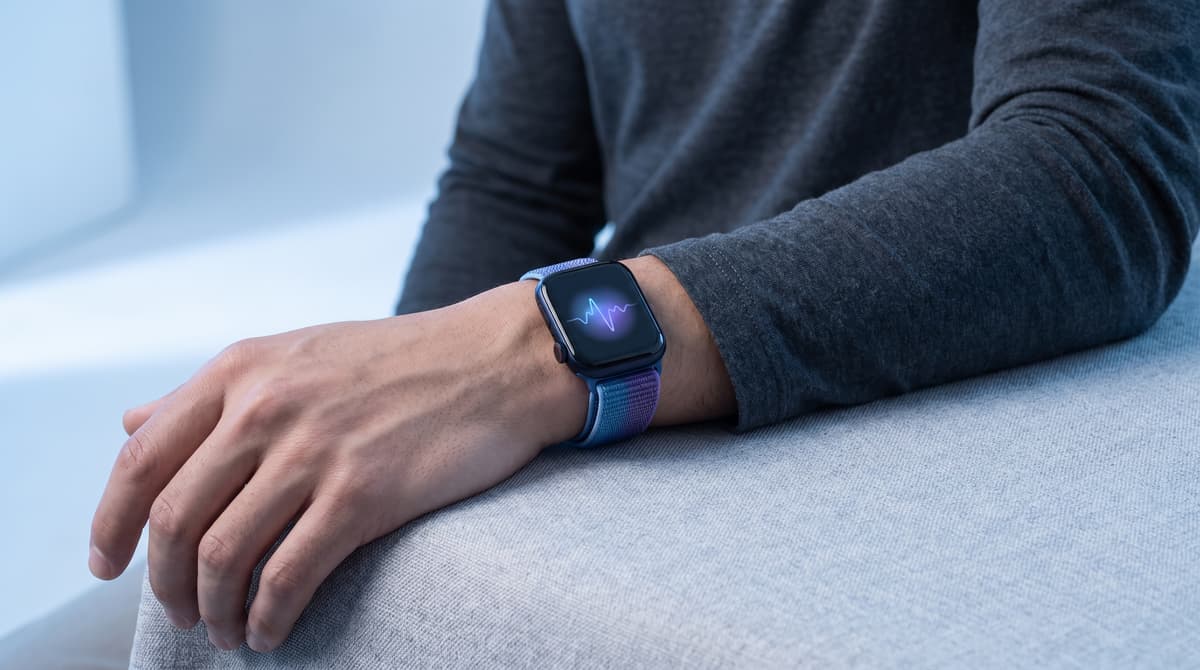
Most people glance at it on their Apple Watch or Oura Ring, see a number, and move on. But that number is telling you something important about your cardiovascular fitness, your stress levels, and — according to a growing body of research — how long you're likely to live.
Here's how to read it, what the ranges actually mean, and what to do if yours is higher than you'd like.
What Counts as "Normal"
The American Heart Association puts the standard adult range at 60-100 bpm. But "normal" and "optimal" are different things. Most healthy adults sit between 55-85 bpm, and research consistently shows that lower within that range is better.
Here's how it breaks down:
By fitness level:
- Sedentary adults: 70-100 bpm
- Moderately active: 60-75 bpm
- Regular exercisers: 50-65 bpm
- Trained athletes: 40-60 bpm
- Elite endurance athletes: 30-40 bpm
By gender:
- Men average 70-74 bpm
- Women average 75-79 bpm (typically 2-10 bpm higher due to smaller heart size and lower stroke volume)
Resting heart rate increases slightly through adulthood until around age 60, then levels off. But fitness level has a far greater impact on your number than age does.
Why Your Resting Heart Rate Matters More Than You Think
This is where the research gets attention-grabbing.
A meta-analysis of 46 studies covering over 1.2 million patients found that every 10 bpm increase in resting heart rate is associated with a 9% higher risk of dying from any cause and an 8% higher risk of dying from cardiovascular disease. A resting heart rate above 80 bpm was linked to a 45% higher all-cause mortality risk.
These findings hold even after controlling for smoking, cholesterol, blood pressure, and other traditional risk factors. Resting heart rate is an independent predictor of longevity.
The Copenhagen City Heart Study tracked over 6,500 people for 18 years and found the same pattern: higher resting heart rate, higher mortality. And critically, the trend matters too. People whose resting heart rate climbs over the years face significantly higher cardiovascular risk — each 10 bpm increase over time was linked to 16% higher cardiovascular death risk.
The takeaway: your resting heart rate isn't just a fitness metric. It's one of the most accessible windows into your cardiovascular health, and tracking it over time is arguably more valuable than any single measurement.
What Affects Your Resting Heart Rate
Your resting heart rate isn't fixed. It fluctuates daily based on a range of factors:
Fitness level — the biggest lever. Aerobic exercise increases your heart's stroke volume (how much blood it pumps per beat), so it doesn't need to beat as often. This is why athletes have notably lower resting heart rates.
Stress — cortisol and adrenaline from chronic stress keep your heart rate elevated. Even low-level work stress or anxiety can raise your baseline by 5-10 bpm over time.
Sleep quality — poor sleep raises both overnight and daytime resting heart rate. Your body needs deep sleep to fully activate the parasympathetic nervous system that keeps your heart rate low.
Caffeine — blocks adenosine receptors and triggers adrenaline release. The effect varies by tolerance, but it's real and measurable, especially if you've recently increased your intake.
Alcohol — disrupts your autonomic nervous system and visibly elevates overnight heart rate. Even 1-2 drinks close to bedtime show up clearly in wearable data.
Dehydration — when blood volume drops, your heart compensates by beating faster to maintain circulation.
Illness — your resting heart rate often spikes before you even feel sick. Research from Stanford and Scripps found that wearables detected 63% of COVID-19 cases before symptom onset by catching resting heart rate elevation. This applies to any infection or illness.
Menstrual cycle — rising progesterone in the luteal phase increases resting heart rate, body temperature, and respiratory rate. Many women using Oura Ring or Apple Watch can see their cycle clearly mapped in their heart rate data.
Medications — beta-blockers lower it; stimulants and some decongestants raise it.
How to Lower Your Resting Heart Rate
The good news: resting heart rate responds well to lifestyle changes. Here's what works, ranked by impact.
1. Aerobic Exercise
This is the single most effective intervention. Regular cardio — 30-40 minutes, 3-4 times per week — strengthens your heart so it pumps more blood per beat and doesn't need to beat as fast. Most people see noticeable improvement in 2-4 weeks and significant drops within 4-12 weeks.
You don't need to run marathons. A study on HIIT found that just 10-minute sessions, 3 times per week for 6 weeks, significantly lowered resting heart rate in previously inactive adults. Walking, cycling, swimming — anything that sustains an elevated heart rate works.
2. Manage Stress
Chronic stress keeps your sympathetic nervous system activated, which directly raises resting heart rate. Meditation, deep breathing, yoga, and tai chi are all shown to lower it. The specific method matters less than doing something consistently.
3. Improve Sleep
Sleep is when your body does its deepest recovery work. Poor sleep quality elevates resting heart rate both overnight and the following day. Prioritize consistent sleep timing, a cool bedroom (65-68°F), and minimizing alcohol before bed.
4. Stay Hydrated
Dehydration forces your heart to work harder. Even mild dehydration — 1-2% of body weight — can elevate your heart rate noticeably. Most people underestimate how much water they need, especially if they're active.
5. Quit Smoking
If you smoke, your resting heart rate can begin dropping within 24 hours of quitting. Nicotine is a stimulant that directly increases heart rate and constricts blood vessels.
6. Watch the Alcohol
Experiment with cutting out evening drinks for a week and watch your overnight heart rate data. For most people, the difference is obvious and immediate.
When to Be Concerned
Too high: A resting heart rate consistently above 100 bpm (tachycardia) without an obvious cause — like caffeine, exercise, or acute stress — warrants a conversation with your doctor. Seek immediate care if a rapid heart rate comes with chest pain, fainting, or shortness of breath.
Too low: Below 60 bpm is completely normal for fit, active people. It's only a concern if it comes with symptoms: dizziness, fatigue, fainting, or confusion. Below 40 bpm, the brain may not receive adequate oxygen, and medical evaluation is important.
Sudden changes: A significant spike or drop from your personal baseline — especially one that doesn't resolve in a few days — is worth investigating. This is where trend tracking becomes critical. A single reading means little. Your pattern over weeks and months means everything.
RHR vs. HRV: Why You Need Both
If you're already tracking resting heart rate, you've probably seen HRV (heart rate variability) on your wearable too. They measure different things, and together they tell a much more complete story.
Resting heart rate is how fast your heart beats. HRV is the variation in time between consecutive beats. Lower resting heart rate is generally better; higher HRV is generally better.
The key insight: HRV is more sensitive. It often reacts to stress, overtraining, or illness before your resting heart rate changes, making it an earlier warning signal. Together they create a clear picture:
- Low RHR + High HRV = well-recovered, strong cardiovascular fitness
- High RHR + Low HRV = stress, overtraining, illness, or poor recovery
- Rising RHR + Falling HRV = early warning that your body is under increasing load
The problem is that most apps show these metrics separately, on different screens, from different devices — with no explanation of what the relationship between them means.
How Wearables Track It
Your Apple Watch, Oura Ring, Garmin, or WHOOP uses photoplethysmography (PPG) — tiny LEDs and sensors that detect blood volume changes through your skin to calculate heart rate. Most devices measure resting heart rate during sleep, when you're at your most still and recovered, giving the most accurate baseline.
Accuracy varies by device. A 2025 peer-reviewed study found Oura Ring had the highest accuracy (under 2% error), with WHOOP at about 3% and Apple Watch closely aligned with clinical instruments. All are accurate enough for trend tracking, which is what matters most.
A single reading on your wrist is a snapshot. Continuous wearable monitoring gives you the movie — and the trend line is where the real insight lives.
Making Sense of All Your Data
Your resting heart rate doesn't exist in isolation. It's connected to your sleep quality, your HRV, your activity levels, your stress, and your recovery. But if your sleep data lives in one app, your heart rate in another, and your workouts in a third, you're seeing fragments instead of the full picture.
That's why we built MotionSync. It connects your Apple Watch, Oura Ring, Garmin, WHOOP, and Fitbit into one unified dashboard — and your AI health coach explains what your resting heart rate trend actually means in context. Not just the number, but why it changed, what's driving it, and what to do about it.
When your resting heart rate spikes after a bad night of sleep and a stressful day at work, MotionSync connects those dots automatically and tells you in plain English.
The Bottom Line
Your resting heart rate is simple to measure, free to track, and backed by decades of research as a meaningful health indicator. A lower resting heart rate generally means a more efficient heart, better cardiovascular fitness, and — statistically — a longer life.
You don't need to obsess over daily readings. Focus on the trend over weeks and months. If it's going down, you're moving in the right direction. If it's creeping up, something in your lifestyle needs attention — and now you know exactly where to look.
Related Articles:
About the author

Written by MotionSync Team
Editorial Team
The MotionSync editorial team writes about wearable data, recovery, sleep, and heart health in plain English. Articles draw on peer-reviewed research and the metrics your wearable already tracks. Content is for general education and is not a substitute for medical advice.