How Does Cannabis Affect Sleep, Heart Rate, and Recovery Data?
Cannabis raises your heart rate within minutes of use and can leave a mark on your overnight numbers well past the point you feel anything. The research on sleep stages is less settled than most people assume, and the clearest wearable-visible pattern shows up not when you use, but when you stop.
If you track your heart rate, HRV, or sleep stages on a wearable and you use cannabis, here is what the evidence actually says about what you are seeing.
Does cannabis raise your heart rate?
Yes, almost immediately. Cannabis stimulates the sympathetic nervous system (the body's accelerator) and dials back the parasympathetic system (the brake), and the combination raises heart rate and blood pressure right after use (Richards et al., Clinical Toxicology, 2020).
A 2018 meta-analysis of human studies pooling multiple trials found that a single dose of THC raised heart rate by about 8 beats per minute on average (Sultan et al., Pharmaceuticals, 2018). The same review notes that the human data on this topic is still limited, and that animal studies in the same analysis showed heart rate falling instead, so the direction of the effect is not universal across species or conditions.
If you see a heart rate spike on your wearable in the window after using cannabis, that spike has mechanistic backing. It is not likely to be a device glitch.
Does cannabis raise the risk of heart rhythm problems?
Cannabis use is associated with a higher risk of heart rhythm problems, and while these are uncommon, they can be serious (Richards et al., 2020). Most of the supporting evidence comes from observational studies, case series, and case reports rather than controlled trials, which is a weaker form of evidence than a randomized trial but is the kind of signal that tends to accumulate before causal mechanisms are fully worked out.
This is not a claim that cannabis use will cause a heart rhythm problem for any individual person. It is a population-level signal that clinicians and researchers treat seriously enough to keep studying.
Does cannabis hurt your REM sleep?
The research here is more mixed than popular wisdom suggests. A 2025 systematic review and meta-analysis found that early studies reporting REM sleep reduction were mostly small trials using high doses of THC with real methodological limitations. More recent, larger studies using lower, more typical doses have reported mixed results, often finding no REM suppression at all (Velzeboer et al., Sleep Medicine Reviews, 2025).
How cannabis affects any one person's sleep architecture appears to depend on dose, the specific mix of cannabinoids in the product, how long someone has been using it, and underlying health conditions (Velzeboer et al., 2025). That is a wide set of variables, and it is a big part of why your experience may not match a friend's or a forum post you read.
For wearable users, the practical read is this: do not assume your device's REM percentage will consistently drop on cannabis-use nights the way it reliably does after a few drinks (see our guide to how alcohol affects sleep, HRV, and recovery). Alcohol's REM suppression is well established. Cannabis's is not, at least not at typical doses in current research.
Does cannabis actually help you sleep?
Many people use cannabis specifically because they feel it helps them fall or stay asleep. A systematic review of dosing and administration studies found that people often do report feeling like their sleep improved, but when researchers used objective sleep testing instead of self-report, that testing showed no improvement in sleep architecture (Velzeboer et al., Sleep, 2022). The review's authors describe high-quality evidence for cannabis as a sleep aid as still limited.
The same review found cannabis showed the most promise for sleep specifically in people with pain-related conditions, not in healthy sleepers, and showed no significant effect on sleep in healthy participants (Velzeboer et al., 2022).
That gap between how you feel and what your wearable's sleep stage breakdown shows is worth sitting with. Subjective sleep quality and measured sleep quality are different things, and a wearable estimates the measured kind.
Is CBD gentler on sleep than THC?
A common assumption is that CBD, without the intoxicating effects of THC, must be the safer or more effective choice for sleep. The evidence does not clearly support that distinction. The same systematic review found no significant differences between the effects of THC and CBD on sleep outcomes (Velzeboer et al., 2022), though products, doses, and the people studied varied widely across the trials included, which limits how far that finding can be generalized.
What does cannabis do to sleep duration?
A population analysis of NHANES data from 2005 to 2018 found that recent cannabis users were more likely than non-users to report both short sleep (under 6 hours) and long sleep (over 9 hours), and heavy users (20 or more days of the past 30) were even more likely to land at those extremes (Diep et al., Regional Anesthesia and Pain Medicine, 2022). This is cross-sectional, self-reported data, so it cannot show that cannabis caused the sleep pattern. But it does suggest cannabis use tracks with less consistent sleep duration at a population level, pulling toward both ends rather than toward a predictable middle.
What happens to your sleep when you stop using cannabis?
This is the part of the research with the clearest, most consistent wearable-visible signal. When people who use cannabis regularly stop, sleep often gets measurably worse for a while. Withdrawal is associated with shorter total sleep time, taking longer to fall asleep, and a rebound increase in REM sleep once the suppression (where it existed) lifts (Velzeboer et al., 2025; Gates et al., Substance Abuse, 2016).
If you track your sleep on a wearable and you cut back or stop using cannabis after regular use, do not be surprised to see your total sleep time drop and your sleep latency climb for a stretch before things settle. This is a documented pattern, not a sign that something is wrong with your device.
What should you actually watch for in your data?
| Wearable signal | What the research says |
|---|---|
| Heart rate right after use | Reliably rises, on average about 8 bpm per dose in pooled human data |
| Heart rhythm irregularities | Associated with increased risk; rare but can be serious |
| REM sleep percentage | Mixed results in recent, larger, lower-dose studies; not a reliable drop |
| Total sleep time | More likely to land at short or long extremes with recent use |
| Sleep in the days after stopping | Often worse for a while: shorter, slower to fall asleep, REM rebound |
If you want the general case for what a wearable can and cannot tell you about one night's sleep, see Sleep Stages Explained. For the comparison most people actually ask about, alcohol remains the substance with the most consistent, well-documented wearable effect; see How Alcohol Affects Your Sleep, HRV, and Recovery.
Is there a lower-risk way to use cannabis if you are going to anyway?
Lower-risk cannabis use guidelines, developed by an international panel of researchers, state that people who use cannabis can meaningfully reduce their risk of health harms by avoiding high-potency THC products, avoiding high-frequency or high-intensity use, not smoking it, and delaying use until after adolescence (Fischer et al., International Journal of Drug Policy, 2022). These guidelines were built around general health harms rather than sleep or heart rate specifically, and the strength of evidence varies across the individual recommendations, but they are the most evidence-graded consumer-facing guidance available.
How MotionSync helps
MotionSync does not tell you whether to use cannabis. What it can do is show you the pattern in your own data: whether your resting heart rate spikes on the nights you log cannabis use, whether your sleep duration is trending toward the extremes the research describes, and whether a recent cutback lines up with the temporary dip in sleep quality that withdrawal research predicts. Context like that, pulled from your own trend lines across Apple Health, Oura, Garmin, Fitbit, and Google Fit, is more useful than a single night's score.
FAQ
Will my wearable show a reliable drop in deep sleep after using cannabis? Not reliably. Unlike alcohol, where deep and REM sleep effects are well documented, recent larger studies on cannabis using typical doses often find no significant change in sleep architecture. Effects vary a lot by dose, product, and the individual.
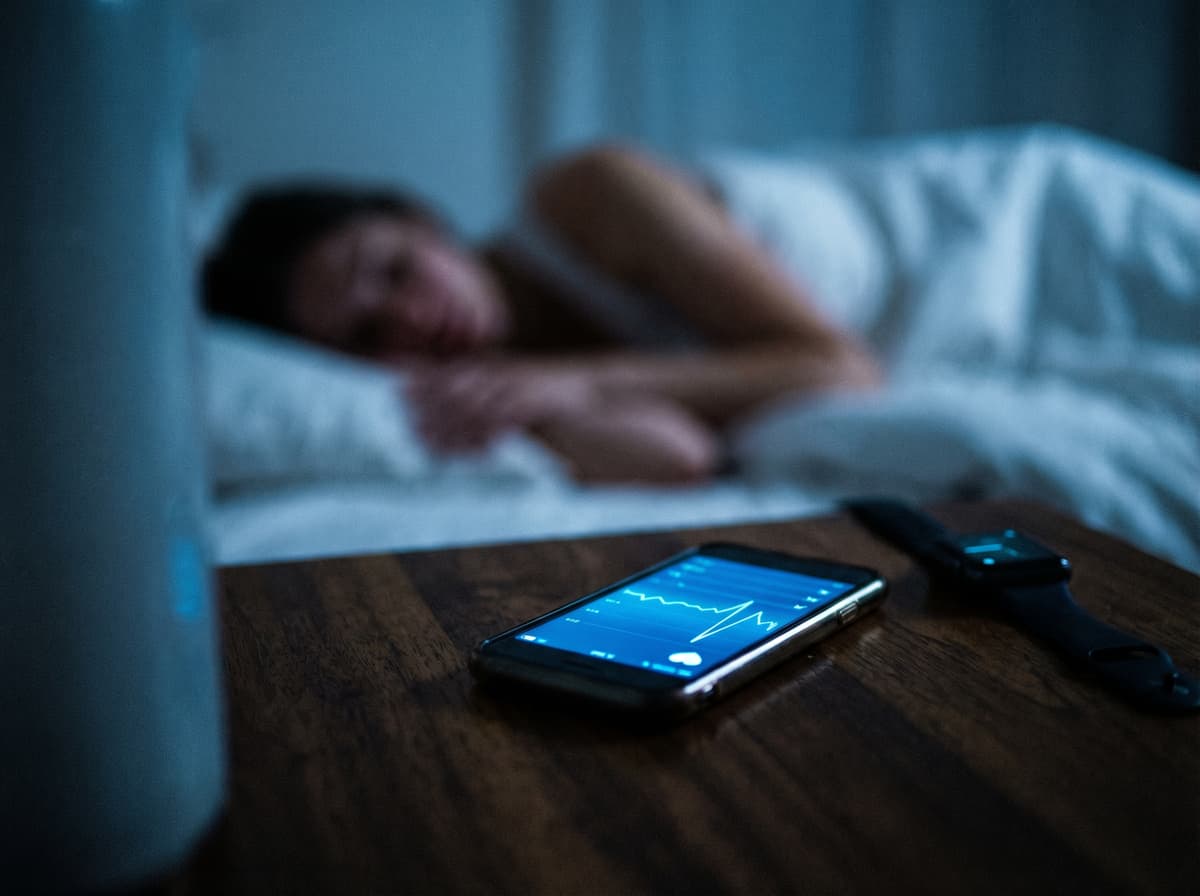
Why did my resting heart rate spike the night I used cannabis? This matches the research. Cannabis activates the sympathetic nervous system and raises heart rate, by about 8 beats per minute on average in pooled human data, within minutes of use. A wearable will typically pick this up in your overnight heart rate graph.
Why does my sleep feel worse the week after I cut back on cannabis? Withdrawal from regular cannabis use is consistently associated with shorter sleep, longer time to fall asleep, and a rebound in REM sleep. This is a documented pattern that can last for a period of days to weeks, not a device malfunction.
Related Articles:
- cannabis
- thc
- sleep
- heart-rate
- recovery
- wearables
About the author

Written by MotionSync Team
Editorial Team
The MotionSync editorial team writes about wearable data, recovery, sleep, and heart health in plain English. Articles draw on peer-reviewed research and the metrics your wearable already tracks. Content is for general education and is not a substitute for medical advice.