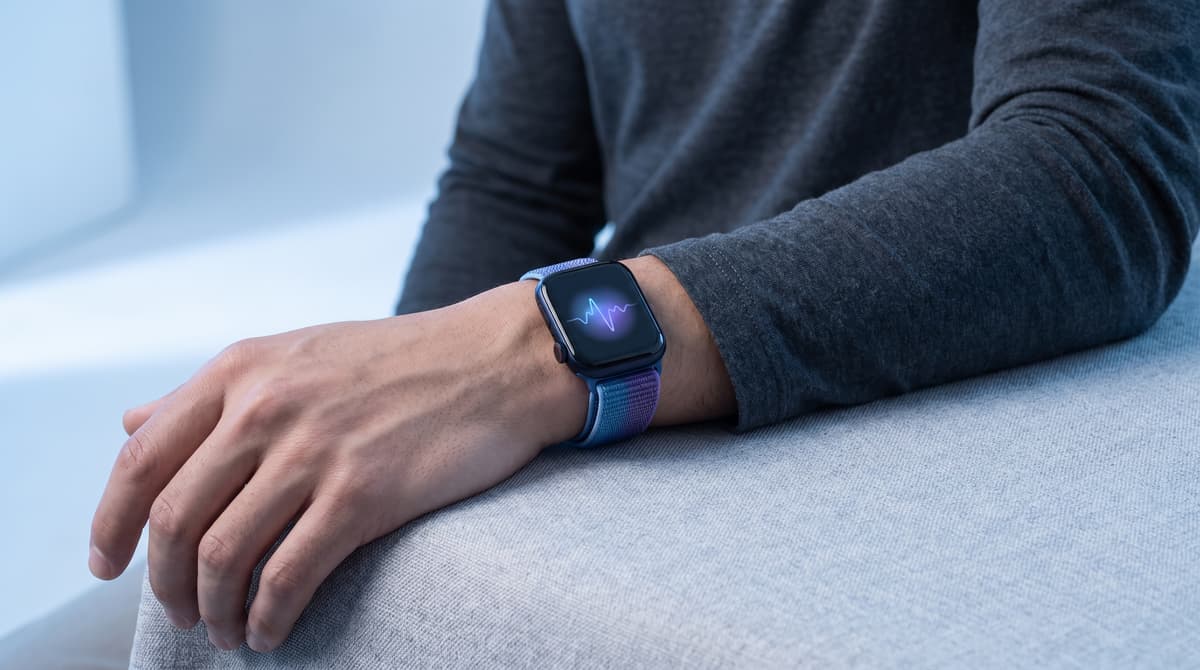
Building a Health Routine Based on Your Data
Nearly half of U.S. adults now own a fitness tracker or smartwatch. That's hundreds of millions of people collecting sleep data, heart rate trends, step counts, and recovery metrics every single day.
And yet, most of them have no idea what to do with it.
A Gartner study found that roughly 30% of wearable owners stop using their devices entirely — not because the tech failed, but because they couldn't translate the numbers into action. The data felt pointless without a plan.
Here's the truth: your wearable is only as useful as the routine you build around it. The tracker does the collecting. You need a system for the doing.
Why Data Without a Routine Is Just Noise
There's a meaningful difference between tracking your health and managing your health. Tracking is passive — you glance at your sleep score, note your step count, maybe feel good or bad about the number, and move on. Managing is active — you use what the data tells you to make specific decisions about your day.
The gap between these two is where most people get stuck. According to ACSM's 2026 fitness trends report, the question is no longer whether people will use wearables — it's whether they'll use them in ways that actually support behavior change.
The good news: you don't need to become a data scientist. You just need a simple framework that connects your morning metrics to your daily choices.
The Five Metrics That Should Shape Your Day
Not every number on your wearable matters equally. These five metrics, checked in the morning, give you the clearest picture of how your body is doing and what it needs today.
1. Sleep Quality (Not Just Duration)
Hours in bed is the least useful sleep metric. What matters is what happened during those hours:
- Deep sleep handles physical repair, immune function, and growth hormone release. Adults typically need 1-2 hours per night.
- REM sleep drives memory consolidation, emotional processing, and cognitive restoration. You need about 1.5-2 hours.
- Sleep efficiency (time asleep vs. time in bed) tells you whether your sleep is productive. Anything above 85% is solid.
Routine implication: If your deep sleep was low, prioritize lower-intensity activity today and avoid late caffeine tonight. If your REM was short, your cognitive load tolerance is likely reduced — not the day for your biggest decisions.
2. Heart Rate Variability (HRV)
HRV reflects how well your autonomic nervous system is balancing stress and recovery. Higher HRV (relative to your personal baseline) means your body is well-recovered. Lower HRV means stress is elevated — from training, poor sleep, work pressure, or any combination.
Routine implication: High HRV morning? Schedule your hardest workout or most demanding work. Low HRV? Swap the intense session for a walk and prioritize stress-reducing activities like breathing exercises or earlier bedtime.
3. Resting Heart Rate (RHR)
Your resting heart rate is a reliable indicator of cardiovascular fitness and acute recovery status. A gradual downward trend over weeks means your fitness is improving. A sudden upward spike usually signals fatigue, illness, or accumulated stress.
Routine implication: If your RHR is 5+ bpm above your baseline for two consecutive mornings, your body is telling you it needs more recovery — regardless of what your training plan says. Respect it.
4. Activity and Movement Patterns
Step counts and active minutes are straightforward, but patterns over time are more revealing than any single day. Consistently falling short of your movement goals may indicate an energy or motivation problem worth investigating. Consistently exceeding them without adequate recovery could be pushing you toward overtraining.
Routine implication: Use weekly averages, not daily numbers, to evaluate whether your activity level matches your goals. A rest day with 3,000 steps doesn't mean you failed. It means you recovered.
5. Trends Over Time
Individual data points fluctuate daily — that's normal. What matters is direction. Is your HRV trending up over the past month? Is your sleep efficiency improving? Is your resting heart rate gradually declining?
Routine implication: Check weekly and monthly trends, not just today's snapshot. One bad night doesn't need a routine overhaul. Two weeks of declining metrics does.
A Practical Morning Routine Built on Data
Here's what a data-informed morning looks like — no degree in sports science required:
Before you get out of bed (2 minutes):
- Check your sleep summary: How much deep sleep? How was efficiency?
- Note your resting heart rate and HRV: Within your normal range?
Based on what you see, adjust your day:
| Morning Data | What It Means | What to Adjust |
|---|---|---|
| Good sleep + high HRV + normal RHR | Well-recovered | Hard workout, tackle demanding tasks |
| Average sleep + normal HRV | Adequate recovery | Moderate activity, business as usual |
| Poor sleep + low HRV | Under-recovered | Easy movement, prioritize rest tonight |
| Poor sleep + elevated RHR (2+ days) | Accumulated fatigue | Rest day, earlier bedtime, hydration focus |
The key principle: You're not changing your entire life based on one morning's data. You're making small, daily adjustments that compound over time.
Three Mistakes That Derail Data-Driven Routines
Mistake 1: Obsessing Over Every Fluctuation
Your HRV will vary day to day. Your sleep score will bounce around. That's biology, not failure. Researchers have even coined a term for the anxiety that comes from obsessive sleep tracking — orthosomnia — where the pursuit of perfect metrics actually disrupts the sleep you're trying to improve.
The fix: Focus on 7-day and 30-day trends. One bad day is noise. A consistent pattern is a signal.
Mistake 2: Trusting the Data Over How You Feel
Your wearable is a tool, not an oracle. If your recovery score says "green" but your body feels wrecked, trust your body. If your metrics say "rest" but you feel genuinely energized, it's okay to move. Data should inform your decisions, not override your lived experience.
The fix: Use a simple "data + feel" check every morning. When they agree, follow the plan. When they disagree, lean toward how you feel — and investigate why the mismatch exists.
Mistake 3: Tracking Everything, Acting on Nothing
The most common pattern: collect data from five apps, spend 15 minutes reviewing dashboards, then do exactly what you were going to do anyway. Tracking without a system for acting on the data is just a more elaborate way of ignoring your health.
The fix: Pick two or three metrics that matter most to your goals. Build specific "if this, then that" rules around them. Everything else is optional context.
Building Your Personal Playbook
The best routine is one that's specific to your life, your goals, and your data. Here's how to build yours:
Step 1: Establish your baselines. Wear your device consistently for 2-3 weeks without changing your routine. Let it learn your normal HRV, RHR, and sleep patterns.
Step 2: Pick your priority. What are you trying to improve — sleep quality, workout performance, stress management, energy levels? Start with one focus area.
Step 3: Create your rules. Based on your baselines, write out 3-5 simple if/then rules:
- "If my HRV is more than 10% below my 7-day average, I'll swap my planned workout for a walk."
- "If my deep sleep was under 45 minutes, I'll skip caffeine after noon today."
- "If my RHR has been elevated for 3+ days, I'll take a full rest day."
Step 4: Review weekly. Every Sunday, look at your trends for the past 7 days. What's improving? What needs attention? Adjust one rule or habit at a time.
Step 5: Be patient. Meaningful health changes show up in weeks and months, not days. The routine that works is the one you actually maintain.
When Your Apps Give You Different Answers
Here's where data-driven routines get frustrating: your Apple Watch, Oura Ring, and Fitbit might all tell you something different about the same night of sleep. Different sensors, different algorithms, different scores.
You end up spending more time reconciling conflicting data than actually acting on it. That's not a routine — it's a part-time job.
This is the problem MotionSync was built to solve. Instead of bouncing between apps and trying to figure out which score to trust, MotionSync pulls all your wearable data into one view and gives you a single, clear picture of what your body is telling you. Your AI health coach connects the dots across devices and translates the numbers into plain-English guidance you can act on immediately.
Less time analyzing. More time living.
Related Articles:
About the author

Written by MotionSync Team
Editorial Team
The MotionSync editorial team writes about wearable data, recovery, sleep, and heart health in plain English. Articles draw on peer-reviewed research and the metrics your wearable already tracks. Content is for general education and is not a substitute for medical advice.